



The East African lion is one of the most iconic wildlife species found across the great savannas, grasslands and protected wilderness areas of East Africa. Known scientifically as Panthera leo, the African lion is an apex predator whose strength, social behavior and commanding presence have made it one of the most sought-after animals on an African safari. For travelers exploring Uganda, Kenya, Tanzania and other parts of the region, encountering an East African lion in its natural habitat can become one of the defining moments of an East African wildlife safari. Watching a pride resting beneath an acacia tree, seeing lionesses carefully stalking prey across open grasslands, hearing territorial roars after sunset or observing cubs playing beside their mothers offers a remarkable introduction to the complex life of Africa’s most famous big cat.
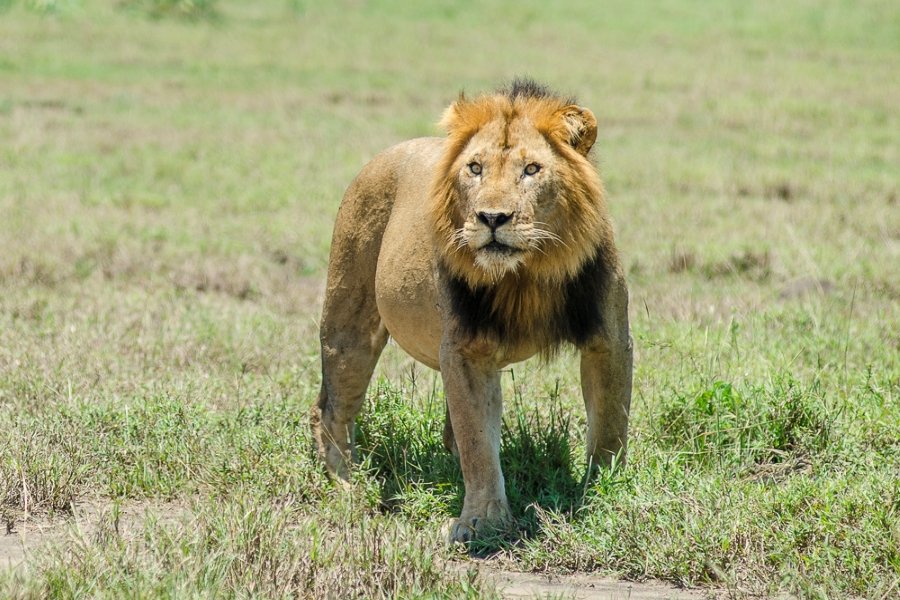
East Africa contains some of the world’s most celebrated lion habitats. The vast plains of Tanzania’s Serengeti ecosystem and Kenya’s Masai Mara are particularly famous for their lion populations, while Uganda offers distinctive opportunities to encounter lions in destinations such as Queen Elizabeth National Park and Murchison Falls National Park. Queen Elizabeth National Park is especially associated with the famous tree-climbing lions of Ishasha, which are sometimes observed resting on the branches of large fig trees. These different landscapes demonstrate how adaptable lions can be when suitable prey, habitat and sufficient space are available.
For wildlife travelers, however, understanding an East African lion involves much more than simply seeing one during a game drive. Lions live within complicated social structures known as prides, defend territories, communicate through roaring and scent marking, cooperate during hunting and raise their young within social groups. Their survival is closely connected to the health of the ecosystems around them. Changes in prey populations, habitat availability, human settlement and conservation management can therefore have significant consequences for individual lion populations.
This comprehensive East African lion guide by Gabba Gorilla Expeditions explores what an East African lion is, where lions live, what they eat, how they hunt, how prides function, how lions reproduce, how long they live, the adaptations that make them effective predators and the conservation challenges facing wild lions. It also explains some of the best places to see lions in East Africa and how travelers can combine a traditional lion safari with gorilla trekking, chimpanzee tracking and other wildlife experiences.
What Is an East African Lion?
An East African lion is a lion occurring within the eastern regions of Africa, particularly across wildlife ecosystems in countries such as Tanzania, Kenya and Uganda. It belongs to the species Panthera leo, one of the world’s largest living cats and the only wild cat that routinely forms highly developed social groups consisting of related females, their offspring and, depending on the pride, one or several adult males.
The term “East African lion” is commonly used geographically rather than to describe every lion in East Africa as an entirely separate species. Lions living across the region belong to the broader African lion population, although populations can differ genetically, ecologically and behaviorally depending on geography, connectivity and local environmental conditions. These differences are important to conservation because protecting lions requires more than simply maintaining individual animals; viable populations need adequate habitat, prey and connections between protected landscapes.
The African lion belongs to the family Felidae, which also includes leopards, cheetahs, servals, caracals and smaller wild cats. Within this family, lions belong to the genus Panthera, alongside other large cats such as leopards, jaguars, tigers and snow leopards.
Unlike the solitary lifestyle characteristic of many other wild cat species, lions have developed an unusually social way of life. A typical lion pride may contain several related adult females, their cubs and young lions, while adult males may control access to the pride and its territory individually or as members of a coalition. Pride size and composition are not fixed and can vary considerably depending on food availability, competition, habitat and other ecological pressures.
This social organization allows lions to cooperate in several important aspects of survival. Lionesses may hunt together when pursuing larger or more difficult prey, pride members can collectively defend valuable territory, and females may contribute to protecting and raising cubs. At the same time, life within a pride involves competition, territorial conflict and constant adaptation to environmental conditions.
Understanding this social structure is one of the reasons observing lions on safari can be so fascinating. A lion sighting is rarely just about the individual animal in front of you. Its position within a pride, relationship with other lions, territorial status, age, sex and current behavior can reveal a much larger story.
Scientific Classification of the East African Lion
The scientific name of the lion is Panthera leo. Lions are mammals belonging to the order Carnivora and family Felidae. They are among the largest terrestrial carnivores in Africa and occupy the upper levels of many food webs in the ecosystems where they remain.
Scientific classification helps researchers understand evolutionary relationships between lions and other cats, but modern lion conservation increasingly also considers genetics and geographical population structure. Historically, lions were divided into numerous subspecies largely according to physical appearance and geographical location. Genetic research has subsequently changed how scientists understand relationships between different lion populations.
For the safari traveler, the most useful point is that the East African lion is part of the wider African lion species, with local populations adapted to different environments across the region.
A lion encountered on the Serengeti plains may experience ecological conditions different from one occupying woodland and savanna habitats in Uganda. Prey abundance, water availability, vegetation, human pressure, competing carnivores and territory size can all influence lion behavior.
This variation is one reason a wildlife safari across several East African destinations can be particularly interesting. Travelers are not simply seeing the same wildlife experience repeated in different countries. They are observing how predators and prey interact with different landscapes and seasonal conditions.
What Does an East African Lion Look Like?
The East African lion possesses the muscular build, powerful limbs, broad head and strong jaws associated with one of Africa’s dominant predators. Adult lions have short coats that usually range through shades of sandy beige, yellowish brown and tawny coloration. This coloring provides effective camouflage within dry grasslands and savanna vegetation.
From a distance, a resting lion can sometimes be surprisingly difficult to notice. Its tawny coat blends into sun-dried grasses, dusty ground and surrounding vegetation. Camouflage is especially valuable during hunting because lions often need to approach prey closely before launching an attack.
Adult males are usually immediately recognizable because of their manes. Mane development differs between individuals. Age, genetics and physiological and environmental factors can influence its size, thickness and appearance. Some males develop large dark manes surrounding much of the head, neck and shoulders, whereas others carry noticeably lighter or less extensive manes.
Female lions generally lack the prominent mane of adult males. Their more streamlined appearance can be particularly advantageous during stalking and coordinated hunting. Lionesses form the stable social foundation of many prides and frequently remain associated with related females within or around their natal ranges.
Both male and female lions have extremely powerful bodies. Their muscular shoulders and forelimbs help them restrain prey, while strong hind limbs provide explosive acceleration. Large paws equipped with retractable claws provide traction and allow lions to grasp prey during an attack.
The head is broad, with strong jaw muscles and large canine teeth adapted for gripping and killing prey. Their rough tongues are covered with backward-facing structures called papillae, which help remove meat from bones and assist with grooming.
One of the most recognizable features of a lion is its tail. The tail is relatively long and ends in a dark tuft. Lions can use tail movements as part of visual communication, particularly when interacting with other members of a pride or moving through vegetation.
Male and Female East African Lions
Sexual dimorphism the physical difference between males and females is particularly obvious among lions. Adult males are normally larger and heavier than adult females and are usually distinguished by their manes.
The mane is one of the defining characteristics of an adult male African lion. As young males mature, their mane gradually develops and can become darker and fuller with age, although appearance differs considerably between individuals.
Adult males play an important role in territorial defense. A male or coalition controlling a pride may patrol its range, scent-mark important locations and roar to advertise its presence. Rival males represent a significant threat, and confrontations over territory and access to prides can sometimes become violent.
Lionesses are usually somewhat smaller but are exceptionally powerful predators. In many prides they conduct a substantial proportion of hunting. Their slightly lighter build can provide advantages when accelerating, maneuvering and cooperating during pursuit.
It would nevertheless be inaccurate to say that male lions never hunt. Adult males can and do hunt, particularly when away from a pride or when suitable opportunities arise. They can use their considerable strength to overpower large prey and may rely on vegetation or darkness to compensate for their heavier bodies.
Both sexes therefore play significant but sometimes overlapping roles within lion ecology.
[H2] How Big Is an East African Lion?
Lions are among Africa’s largest predators, but there is no single body size that describes every East African lion. Size varies according to sex, age, genetics, habitat, food availability and individual condition.
Adult males are generally considerably larger than females. Their heavy muscular bodies and manes make them appear particularly imposing when viewed at close—but safe—distance from a safari vehicle. Lionesses are usually lighter and more streamlined.
The physical power of a lion becomes much more apparent when it stands or walks near a safari vehicle. Photographs often fail to communicate the thickness of the shoulders, size of the paws and muscular structure of a mature animal.
Despite their size, lions can move remarkably quietly when stalking. Their padded paws help reduce noise as they move through vegetation, while flexible bodies allow them to lower themselves close to the ground.
Their strength is particularly evident during feeding and hunting. Lions are capable of tackling prey considerably larger than themselves, especially when several pride members cooperate.
However, power does not mean lions can run indefinitely. They rely largely on short bursts of speed and explosive acceleration rather than prolonged pursuit. Successful hunting therefore depends heavily on stalking and approaching prey before the final charge.
Where Do East African Lions Live?
The habitat of the East African lion includes savannas, grasslands, open woodland, scrub and other environments capable of supporting sufficient prey and providing suitable cover for hunting and resting.
The classic image of a lion standing on an endless golden plain is certainly accurate for some East African ecosystems, particularly portions of the Serengeti-Mara landscape. However, lions are not restricted to completely open grasslands. They can occupy a range of habitats, including bushland and wooded savanna.
Suitable lion habitat depends heavily on prey availability. Large herbivores such as antelopes, buffalo and zebras can form important components of lion diets depending on the ecosystem. Reliable water and adequate space also influence where prey animals occur and therefore where lions can survive.
Vegetation structure matters as well. Lions are ambush-oriented predators and frequently benefit from grasses, shrubs, riverbanks, drainage channels and other forms of cover that allow them to approach prey without being detected.
Some of East Africa’s most significant lion landscapes occur in Tanzania and Kenya, where large protected ecosystems support substantial populations of herbivores and carnivores. Uganda also contains important lion habitats, especially within major savanna conservation areas.
Protected areas play a critical role in maintaining these populations, but lions do not understand park boundaries. Individuals may move beyond protected areas, especially where wildlife ranges extend into surrounding landscapes. This makes conservation outside national parks and reserves important as well.
East African Lions and the Savanna Ecosystem
Savanna ecosystems are characterized by mixtures of grasses, scattered trees, shrubs and seasonal changes in rainfall and vegetation. These landscapes support some of Africa’s greatest concentrations of large mammals and provide ideal conditions for predator-prey relationships.
Lions occupy the upper levels of this ecological system. As large carnivores, they prey on herbivores and interact with other predators and scavengers. Their kills can also provide food for organisms ranging from hyenas and jackals to vultures and smaller scavengers.
The relationship between lions and prey is dynamic. Herbivores have evolved behaviors that help them detect and escape predators, while lions depend on stealth, cooperation, camouflage and timing to overcome those defenses.
During daylight hours, lions frequently rest for extended periods, particularly when temperatures are high. As conditions become cooler in the late afternoon, evening or early morning, activity may increase. This is one reason early morning and late afternoon game drives can be particularly rewarding for travelers hoping to observe active predators.
Rainfall can dramatically transform these habitats. Dry grasslands can become green after seasonal rains, while herbivores respond to changing vegetation and water availability. In migratory ecosystems, enormous movements of wildebeest, zebra and other herbivores can alter the distribution of predators.
Understanding these ecological connections transforms a lion safari from simply searching for a big cat into observing an interconnected natural system.
How Do East African Lions Live?
One of the most fascinating characteristics of the East African lion is its social organization. Unlike most wild cat species, lions commonly live in groups called prides.
A pride typically consists of related females and their offspring, while one or more males may associate with and defend the pride. Male lions sometimes form coalitions, often involving relatives or males that have developed strong social bonds.
The exact composition of a pride changes over time. Cubs are born, juveniles mature, young males leave, adults die and new males may take control. A pride that a safari guide observes during one year may therefore have a noticeably different structure several years later.
Female lions often form the long-term social core. Related females may remain within the same general area and cooperate in hunting, territorial defense and cub rearing.
Male tenure can be less stable. Males may control a pride for a period before being challenged by rivals. Coalitions can improve their ability to obtain and defend territory, although competition between males remains intense.
Lion society therefore combines cooperation and competition. Pride membership provides advantages, but maintaining territory and access to resources requires constant effort.
What Is a Lion Pride?
A lion pride is a social group of lions generally centered around related adult females and their offspring. Adult males may be associated with the pride individually or as members of a coalition.
There is no universal number of lions that constitutes a pride. Some are relatively small, while others can become considerably larger when ecological conditions provide sufficient prey.
Pride size can influence hunting strategy. Larger groups may be capable of tackling large prey, although feeding competition also increases when many lions share a kill.
Social bonds are reinforced through behaviors such as rubbing heads, grooming, resting together and greeting one another after periods of separation. Cubs grow up surrounded by multiple pride members and learn through both play and observation.
Play behavior among cubs has an important developmental function. Chasing, wrestling, stalking and pouncing help young lions develop coordination and physical skills that later become essential for hunting and social interaction.
For safari travelers, finding a pride with cubs can provide fascinating opportunities to observe these relationships. The animals may appear relaxed, but every interaction provides information about hierarchy, bonding and development.
Why Do Lions Live in Prides?
Living socially provides lions with several potential advantages. Cooperative hunting can improve their ability to capture certain large prey, while several adults can defend territories and cubs more effectively than a solitary individual.
Territorial defense is particularly important because high-quality habitat contains valuable resources such as prey, water and suitable places for raising young. Neighboring prides may compete over these resources.
Group living can also help females protect cubs. Lion cubs face substantial mortality during their early lives, and protection from adult pride members can improve their chances under some circumstances.
However, pride living also creates competition. Every animal requires food, and a large group gathering around a carcass can produce intense competition. Dominant individuals may gain access before younger or weaker animals.
The evolution of lion sociality therefore reflects a balance between cooperation and competition shaped by prey, territory and reproduction.
How Do East African Lions Communicate?
Lions communicate through sound, scent, body posture, touch and visual signals. Perhaps the most impressive form of communication is the roar.
A lion’s roar can travel across considerable distances, particularly under favorable nighttime conditions. Roaring can advertise territorial occupation, help separated pride members locate one another and warn rival lions of the presence of resident animals.
Hearing a lion roar while staying in or near an East African wildlife area is a dramatically different experience from hearing one through a recording. The sound is deep and powerful and can carry through the landscape after darkness falls.
Lions also use scent marking. Males, and sometimes females, deposit scent at locations within their ranges. Scent provides information that other lions can detect even when the animal that produced it is no longer present.
Body language is equally important during close social interactions. Ear position, facial expression, posture and tail movements can indicate excitement, aggression, submission or interest.
Physical contact reinforces social relationships. Pride members frequently rub their heads and bodies against each other, groom one another and rest in close contact.
What Do East African Lions Eat?
East African lions are carnivores and feed primarily on animal prey. Their diet varies according to location, season, prey availability and pride size.
Depending on the ecosystem, lions may prey upon animals such as zebra, wildebeest, buffalo and various antelope species. Smaller mammals can also be taken, while exceptionally large prey may become possible when several lions cooperate.
Lions are also opportunistic. They may scavenge carcasses or take food from other predators when an opportunity arises. Likewise, hyenas and other scavengers may attempt to steal portions of lion kills.
This competition demonstrates that the popular distinction between “hunter” and “scavenger” is often too simple. Many African carnivores use both strategies when circumstances allow.
A lion’s prey selection also depends on risk. Large animals can provide substantial quantities of meat but can be dangerous to attack. Buffalo, for example, possess considerable strength and can injure or kill predators.
Every hunt therefore involves an energetic calculation: the potential nutritional reward must be balanced against the effort and danger involved in obtaining it.
How Do East African Lions Hunt?
Lion hunting depends heavily on stealth. Although lions can accelerate rapidly, they are not designed for prolonged high-speed pursuits comparable with those of a cheetah. Instead, they attempt to approach prey as closely as possible before launching a short, explosive attack.
Camouflage plays an important role. A lion’s tawny coat blends effectively with dry grass, while darkness and vegetation can provide additional concealment.
When several lionesses hunt together, they may approach prey from different positions. Cooperative hunting does not always follow an identical plan, but the presence of multiple predators can make escape more difficult for targeted prey.
Once close enough, the lion accelerates rapidly, attempting to close the remaining distance before the prey can escape. Powerful forelimbs and claws can help bring the animal down, after which the lion uses its jaws to restrain and kill it.
Most hunting attempts are not guaranteed to succeed. Prey animals possess excellent hearing, vision, speed and defensive behavior, and many potential hunts end before a lion reaches striking distance.
This uncertainty is part of what makes observing natural hunting behavior so compelling on safari. Travelers may watch a lion spend a long period stalking only for the prey to detect it and disappear within seconds.
Responsible guides do not interfere with these interactions. Predator-prey relationships are fundamental natural processes that should be observed without disrupting the animals.
When Are East African Lions Most Active?
Lions spend a large proportion of their time resting. Conserving energy is important for a predator that relies on powerful bursts of physical activity.
Activity frequently increases during cooler periods, particularly around dusk, nighttime and early morning. Lower temperatures make movement less energetically demanding, while darkness can improve a lion’s ability to approach some prey.
For this reason, early morning game drives are often highly productive when searching for lions. Travelers may encounter animals returning from nighttime activity, feeding on a recent kill, walking along tracks or interacting with pride members before temperatures rise.
Late afternoon game drives can also be rewarding as lions begin becoming more active after spending much of the day resting.
However, lions can be encountered at any time. A pride may rest beneath a tree at midday, while individuals can move during daylight depending on weather, disturbance, food and other conditions.
Wildlife viewing is inherently unpredictable, which is precisely what makes a genuine safari different from observing animals in managed environments.
Reproduction and the Life Cycle of East African Lions
Reproduction is central to pride dynamics. Female lions reach reproductive maturity as they grow into adulthood, while males face the additional challenge of gaining access to prides and maintaining territorial control.
When a female is receptive, mating can occur repeatedly over several days. After a gestation lasting roughly three and a half months, the female gives birth to a litter, usually in a concealed location offering some protection during the cubs’ earliest and most vulnerable period.
Newborn lion cubs are small, dependent and unable to survive without maternal care. Their eyes open after birth, and as they grow they gradually become stronger and more mobile.
Eventually the mother introduces the cubs to other members of the pride. From this point, young lions become part of the wider social group.
Cub survival can be challenging. Hunger, disease, accidents, predators and conflict involving adult lions can all contribute to mortality.
Those that survive spend much of their youth learning. Play becomes a training ground for adult behavior. Cubs stalk each other, chase moving objects, wrestle and practice pouncing.
As young males approach maturity, they generally leave or are displaced from their natal pride. They may travel alone or with brothers and other companions, eventually attempting to establish themselves elsewhere.
Young females are more likely to remain associated with their natal pride or related females, contributing to the continuity of the pride across generations.
How Long Do East African Lions Live?
The lifespan of an East African lion in the wild depends on sex, competition, food availability, disease, injuries and human-related pressures.
Life can be particularly demanding for adult males because territorial competition exposes them to fights with rivals. Injuries can affect an individual’s ability to hunt or maintain access to food.
Females may benefit from the relatively stable social structure of established prides, although they still face substantial ecological challenges.
Rather than focusing only on a maximum age, it is useful to understand that wild lion survival reflects continuous pressure. Every year requires access to prey, water, territory and reproductive opportunities while avoiding serious injuries and other threats.
These realities are important for conservation because protecting lions means protecting the ecological conditions that allow multiple generations to survive.
Adaptations of the East African Lion
The success of lions as predators is the result of numerous physical and behavioral adaptations working together.
Their tawny coats provide camouflage. Powerful muscles generate explosive acceleration. Large paws and retractable claws help grip the ground and capture prey. Strong jaws and canine teeth allow lions to restrain animals.
Their senses are also highly developed. Vision is particularly valuable under low-light conditions, while acute hearing can detect movements that humans might overlook.
Whiskers provide sensory information around the face, while scent is important in communication and territorial recognition.
Behavioral adaptations are equally significant. Cooperative hunting, pride formation, territorial defense and social care of offspring distinguish lions from many other cats.
Together these features allow lions to occupy the role of apex predator across many East African savanna ecosystems.
Where Can You See East African Lions in the Wild?
One of the most exciting aspects of planning an East African lion safari is the variety of landscapes in which lions can be encountered. East Africa contains some of the world’s most famous wildlife ecosystems, ranging from the enormous grasslands of Tanzania’s Serengeti to the rolling plains of Kenya’s Masai Mara and the savanna, woodland and riverine environments of Uganda. Each destination provides a different setting for observing lions and understanding how these powerful predators adapt to their surroundings.
For travelers asking where to see lions in East Africa, Uganda, Kenya and Tanzania provide some of the region’s most rewarding opportunities. Tanzania is internationally recognized for the Serengeti and Ngorongoro ecosystems, while Kenya’s Masai Mara is celebrated for its predator-rich plains. Uganda provides a particularly diverse safari experience because lion viewing can be combined relatively easily with mountain gorilla trekking, chimpanzee tracking, boat safaris and other wildlife experiences. The famous tree-climbing lions associated with the Ishasha sector of Queen Elizabeth National Park add another distinctive attraction.
Lion sightings are never guaranteed because these are free-ranging wild animals. Their movements depend on prey, weather, territorial activity, breeding behavior and many other natural factors. However, visiting established lion habitats with experienced guides can significantly improve a traveler’s chances of finding and interpreting lion activity.
East African Lions in Uganda
Uganda is particularly interesting for travelers who want to combine a traditional African wildlife safari with primate experiences. The country contains savanna ecosystems supporting lions, elephants, buffaloes, antelopes and numerous other mammals while also protecting forests inhabited by mountain gorillas and chimpanzees.
The country’s best-known lion destinations include Queen Elizabeth National Park and Murchison Falls National Park. These protected areas differ considerably in scenery and ecology, allowing travelers to experience lions within different Ugandan landscapes.
A carefully designed Uganda safari can therefore move from searching for lions on open savannas to tracking chimpanzees through tropical forest and eventually trekking mountain gorillas in southwestern Uganda. This combination is one of the reasons Uganda can be especially attractive to travelers who want more than a conventional big-game safari.
With Gabba Gorilla Expeditions, a lion-focused Uganda itinerary can be incorporated into a longer private wildlife journey according to the traveler’s available time, preferred accommodation level and other wildlife interests.
[H3] Lions in Queen Elizabeth National Park
Queen Elizabeth National Park is one of Uganda’s best-known wildlife destinations and an important location for travelers interested in seeing East African lions in Uganda. Located in western Uganda, the park contains an impressive mixture of savanna, woodland, wetlands, crater landscapes and channels connecting major lakes.
This ecological diversity supports numerous wildlife species and creates varied habitats for predators and prey. Lions occupy parts of this broader ecosystem and may be encountered during guided game drives.
Game drives through the park provide opportunities to search for lions while also observing animals such as elephants, buffaloes, Uganda kobs, warthogs and other wildlife. The presence of prey is fundamental to lion ecology because predator distribution is closely connected to where suitable prey animals can be found.
Finding lions often requires patience. Guides look for more than the animals themselves. They may examine tracks, listen for alarm calls, observe the behavior of herbivores or investigate areas where lions were previously active.
This makes an experienced safari guide particularly valuable. A good guide does not simply drive until an animal appears. The guide interprets signs within the environment and helps travelers understand why animals may be using particular areas.
Tree-Climbing Lions of Ishasha
Among the most famous wildlife attractions associated with Uganda are the tree-climbing lions of Ishasha. The Ishasha sector lies within the southern part of Queen Elizabeth National Park and has become particularly well known because lions in this landscape are sometimes observed resting in large trees.
Seeing a lion stretched across a branch can initially appear unusual. Lions are powerful terrestrial predators, and the classic image of an African lion normally places the animal on open ground rather than several meters above it. This distinctive behavior has therefore made Ishasha an important stop on many Uganda wildlife itineraries.
The phrase tree-climbing lions of Uganda should not be interpreted to mean that every lion in Ishasha will be found in a tree or that every visit guarantees such a sighting. These remain wild animals whose behavior changes according to conditions.
When lions do climb, they may rest for extended periods along large branches. From a respectful distance, safari travelers may have opportunities to observe the animals sleeping, changing position, scanning the surrounding landscape or eventually descending.
Several explanations have been proposed for tree-climbing behavior among lions, including seeking relief from heat or insects and gaining an elevated position from which to observe their surroundings. Wildlife behavior is rarely explained by one simple factor, however, and travelers should be cautious about treating any single explanation as universally proven.
The experience is nevertheless remarkable. A mature lion draped across a tree branch with the Ishasha landscape extending behind it creates one of Uganda’s most distinctive safari scenes.
Lions in Murchison Falls National Park
Murchison Falls National Park is another major destination for travelers interested in seeing lions in Uganda. Located in northwestern Uganda, the park contains broad savanna landscapes, woodland and the Nile corridor, creating habitat for a diverse wildlife community.
Game drives through the savanna areas can provide opportunities to encounter lions alongside elephants, buffaloes, giraffes, antelopes and other mammals. Predator sightings depend on natural movements and conditions, but lions remain one of the animals many visitors hope to encounter.
Morning game drives are particularly valuable because cooler conditions can coincide with increased predator activity. Lions may be seen walking through their territories, interacting with other pride members, feeding or resting after nighttime activity.
Murchison Falls also allows travelers to combine traditional game drives with experiences associated with the Nile and the dramatic waterfall for which the park is named. This diversity makes the destination valuable within longer Uganda safari itineraries.
East African Lions in Kenya
Kenya has been one of Africa’s most recognizable safari destinations for generations, and lions remain central to its wildlife appeal. The country protects extensive savanna landscapes where predators coexist with large populations of herbivores.
For travelers researching where to see East African lions in Kenya, the Masai Mara is usually one of the first destinations considered. Other Kenyan ecosystems also support lions, but the Mara’s open landscapes and rich wildlife concentrations have made it particularly famous.
Lions of the Masai Mara
The Masai Mara National Reserve and its surrounding ecosystem are among the world’s best-known wildlife landscapes. Open grasslands, seasonal rivers and abundant prey create suitable conditions for several large carnivores, including lions.
The relatively open landscape can provide excellent opportunities to observe lion behavior. Depending on circumstances, travelers may encounter prides resting together, females moving through grasslands, males patrolling territories or cubs interacting around a pride.
The Mara is also part of the broader Serengeti-Mara ecosystem, an enormous ecological landscape shared between Kenya and Tanzania.
Lions and the Great Migration
The famous movement of wildebeest and other grazing animals through the Serengeti-Mara ecosystem creates one of the world’s most impressive wildlife spectacles. The presence of enormous numbers of herbivores inevitably influences predators.
Lions living within these ecosystems respond to the availability and distribution of prey. However, it is important not to oversimplify their ecology by imagining that lions simply follow migrating herds continuously across the entire ecosystem. Resident prides maintain territories and respond to local conditions.
For safari travelers, migration periods can nevertheless create dramatic predator-prey interactions. Large concentrations of herbivores provide feeding opportunities for lions, hyenas, crocodiles and other predators.
East African Lions in Tanzania
Tanzania is one of the world’s outstanding destinations for observing lions in natural ecosystems. Its protected areas include some of Africa’s largest and most celebrated wildlife landscapes.
The Serengeti National Park is particularly famous, while the Ngorongoro Conservation Area provides another distinctive setting for observing predators and prey.
Lions of Serengeti National Park
Few places are more closely associated with the African lion than the Serengeti.
The Serengeti landscape consists of much more than one endless grassland. Different areas include open plains, woodland, rocky outcrops, riverine environments and other habitats that influence wildlife distribution.
Lions can use these features strategically. Vegetation can provide concealment for stalking, while rocky outcrops may offer elevated resting and observation points.
The Serengeti’s extensive predator-prey relationships make it particularly valuable for travelers interested in animal behavior rather than simply creating a checklist of species.
Lions of the Ngorongoro Area
The Ngorongoro landscape provides another remarkable environment for observing East African wildlife. The famous crater contains grasslands, wetlands and other habitats supporting a concentration of large mammals.
Lions form part of this predator community and can sometimes be observed during wildlife drives on the crater floor.
The enclosed visual character of the crater creates a very different safari atmosphere from the seemingly limitless Serengeti plains.
Combining Serengeti and Ngorongoro therefore provides travelers with two contrasting landscapes while maintaining excellent opportunities for broader wildlife observation.
Uganda vs Kenya vs Tanzania for Seeing Lions
Choosing the best country to see lions in East Africa depends on what the traveler wants from the overall safari.
Kenya and Tanzania are particularly famous for expansive savanna landscapes and major concentrations of classic African wildlife. Travelers primarily interested in spending substantial amounts of time observing big cats and large herbivore communities may naturally be drawn toward destinations such as the Masai Mara and Serengeti.
Uganda offers a somewhat different advantage. It allows travelers to combine lion viewing with some of Africa’s premier primate experiences.
A traveler could search for lions in Queen Elizabeth National Park, continue through Ishasha looking for tree-climbing lions and then travel into the forests of Bwindi for mountain gorilla trekking.
Chimpanzee tracking can also be incorporated into longer programs.
There is therefore no universally correct answer to whether Uganda, Kenya or Tanzania is “best” for lions.
For extensive classic savanna experiences, Kenya and Tanzania are exceptionally strong choices. For travelers seeking lions together with mountain gorillas, chimpanzees and varied landscapes within one journey, Uganda offers an especially attractive combination.
Best Time to See East African Lions
Lions can be observed throughout the year in many major East African wildlife destinations. The best time to see lions in East Africa therefore depends on destination, weather, vegetation, wildlife movements and the traveler’s broader interests.
Dryer periods can offer advantages in some ecosystems because vegetation may become shorter and animals may concentrate around reliable water sources. Reduced vegetation can make wildlife easier to detect.
However, wetter periods should not automatically be considered poor for safari travel. Green landscapes can be exceptionally beautiful, birdlife may be abundant and some wildlife species give birth during seasonal periods.
The best approach is to choose travel dates according to the entire safari rather than lions alone.
What to Expect on an East African Lion Safari
A typical East African lion safari involves exploring suitable wildlife habitat in a safari vehicle accompanied by a knowledgeable guide.
Game drives commonly begin early in the morning when temperatures are cooler and many animals may be active. Depending on the destination and itinerary, another game drive may take place later in the afternoon.
Finding lions requires observation and patience.
Sometimes lions are visible immediately beside a track. At other times, considerable searching may be necessary.
Experienced guides watch the surrounding landscape continuously. Tracks in the soil, alarm calls from prey species, vultures circling or gathering, unusual herbivore behavior and information about recent wildlife activity can all contribute to the search.
When lions are found, travelers should remain inside the vehicle unless guides and park regulations specifically indicate otherwise.
Photographing East African Lions
Photographing an East African lion can be one of the highlights of a safari, but the most memorable images often result from patience rather than simply getting as close as possible.
Early morning and late afternoon light can create attractive conditions for wildlife photography. Low-angle sunlight can emphasize the texture of a male’s mane, illuminate the eyes of a lioness or create depth across the surrounding grasslands.
Behavior is often more interesting than a simple portrait.
A lioness interacting with her cubs, pride members greeting each other, a male scent-marking his territory or lions carefully watching distant prey can tell a richer story about the animal’s life.
Travelers should never encourage guides to drive irresponsibly, block animals or disturb hunting behavior simply to obtain a photograph.
East African Lion vs Leopard
Travelers sometimes confuse lions and leopards because both are large African cats and may occur within the same protected areas. In reality, the two species differ greatly in appearance, behavior and lifestyle.
A lion is generally much larger and more heavily built than a leopard. Adult male lions are particularly easy to distinguish because of the mane. Lionesses lack manes, but their body size, head shape and social behavior usually separate them clearly from leopards.
Leopards are typically solitary animals. They rely heavily on stealth and often use trees for resting, hiding or storing kills. Lions, by contrast, are much more social and frequently occur in prides.
Both species can hunt at night and both are capable ambush predators, but they tend to use habitat and prey differently.
East African Lion vs Cheetah
The lion and cheetah are also very different despite both being famous African predators.
The cheetah is built primarily for speed. Its slender body, long legs and lightweight frame help it achieve extraordinary acceleration over short distances. Lions are heavier, more muscular and rely more on stealth, power and close-range attacks.
Cheetahs generally hunt during daylight more often than lions in some ecosystems, partly because this can reduce competition with larger predators.
Unlike lions, cheetahs do not form prides built around related adult females. Female cheetahs are usually solitary except when raising cubs, while males may sometimes live in coalitions.
East African Lion vs Hyena
Lions and spotted hyenas are among the most important large carnivores in many East African ecosystems, and their relationship is more complicated than popular stereotypes suggest.
Both species are capable hunters and both may scavenge. Hyenas do not simply wait for lions to kill prey, and lions do not rely exclusively on hunting their own food.
Competition between lions and hyenas can be intense. They may fight over carcasses, water, territory and access to food. The balance often depends on numbers.
Their interactions form an important part of East African predator ecology and can produce some of the most dramatic wildlife encounters observed on safari.
Interesting East African Lion Facts
Why Do Male Lions Have Manes?
The mane of an adult male lion is one of the most recognizable features in the animal kingdom. It develops as males mature and can vary greatly in color, length and thickness.
The mane contributes to visual communication and may make a male appear larger and more imposing during confrontations. Mane characteristics can also reflect age, genetics, condition and environmental influences.
Why Do Lions Roar?
Roaring is one of the most powerful forms of long-distance communication used by lions. A roar can advertise territorial presence, warn rivals and help pride members locate one another.
Lions often roar more actively during cooler hours and at night, when sound can carry effectively across open landscapes.
How Fast Can an East African Lion Run?
Lions can achieve impressive short-distance speed, but they are not built for prolonged pursuit. Their hunting strategy depends on approaching prey closely enough that a brief burst of acceleration can close the remaining distance.
This is one reason stalking is so important.
Can East African Lions Climb Trees?
Yes, lions are physically capable of climbing trees, although they are generally less specialized for climbing than leopards.
The famous tree-climbing lions associated with Uganda’s Ishasha sector demonstrate this ability particularly well.
Do Male Lions Hunt?
Yes. The statement that only lionesses hunt is an oversimplification.
Lionesses often perform a large proportion of cooperative hunting within prides, but male lions are fully capable hunters.
How Many Lions Live in a Pride?
There is no fixed number.
Some prides are small and consist of only a few adult females and offspring, while others can become considerably larger. Pride size depends on food availability, territory quality, reproduction and social dynamics.
Conservation of East African Lions
The future of East African lions depends on protecting both animals and the landscapes they require.
Lions need extensive habitat, sufficient natural prey and the ability to move through functioning ecosystems. Their large territories can make them especially vulnerable when landscapes become fragmented.
Human population growth, agriculture, roads, settlements and livestock expansion can reduce available habitat or increase contact between lions and people.
Human-lion conflict is one of the most difficult conservation challenges. When lions kill livestock, families may suffer major economic losses. Retaliatory killing can then occur.
Successful conservation therefore requires approaches that recognize the needs of both wildlife and neighboring communities.
Measures can include better livestock protection, compensation or conservation benefit programs where appropriate, land-use planning, habitat corridors, tourism revenue sharing, research and community participation.
Protected areas remain essential, but many lion populations depend on landscapes extending beyond park boundaries.
Why Responsible Lion Tourism Matters
Wildlife tourism can support conservation when it is managed responsibly.
Travelers create economic value around living wildlife. Park fees, accommodation, guiding and related tourism services can contribute to conservation systems and local economies.
However, tourism itself must avoid putting excessive pressure on animals.
Crowding around predators, blocking hunting routes, driving off designated tracks where prohibited, making unnecessary noise or pressuring animals for photographs can reduce the quality and ethics of wildlife viewing.
Responsible operators prioritize the animals and the ecosystem.
At Gabba Gorilla Expeditions, lion viewing should always be approached as observation of wild behavior rather than staging a performance for visitors.
[H2] East African Lion Safari with Gabba Gorilla Expeditions
An East African lion safari with Gabba Gorilla Expeditions can be designed around the traveler’s preferred combination of wildlife, primates, landscapes and accommodation.
For travelers concentrating on Uganda, Queen Elizabeth National Park and Murchison Falls National Park provide important lion-viewing opportunities. The Ishasha sector adds the possibility of encountering tree-climbing lions.
A Uganda itinerary can then continue into Bwindi Impenetrable National Park or Mgahinga Gorilla National Park for mountain gorilla trekking.
This combination creates one of East Africa’s most diverse wildlife journeys.
Instead of choosing between big-game viewing and gorilla trekking, travelers can experience both.
Longer journeys can include chimpanzee tracking, boat safaris, birdwatching, cultural experiences and additional national parks.
For travelers wanting broader East African exploration, Gabba Gorilla Expeditions can also develop multi-country safari concepts combining Uganda with Rwanda, Kenya or Tanzania depending on routing, interests and current travel requirements.
Combining Lion Safaris with Gorilla Trekking
One of the most exciting ways to experience East Africa is to combine an African lion safari with mountain gorilla trekking.
These experiences take place in dramatically different environments.
Lion safaris generally explore open savanna, grassland and woodland ecosystems by vehicle. Gorilla trekking takes travelers on foot into dense mountain forests accompanied by trained guides and trackers.
Combining the two therefore provides an extraordinary contrast.
In Uganda, Queen Elizabeth National Park and Bwindi Impenetrable National Park can fit particularly well within the same itinerary. Travelers can search for lions and other savanna wildlife before continuing toward the forests inhabited by mountain gorillas.
The Ishasha sector can form an important link within this journey, creating an opportunity to search for tree-climbing lions before continuing toward Bwindi.
Luxury East African Lion Safaris
Travelers seeking additional privacy and comfort can choose a luxury East African lion safari.
Luxury does not need to mean separating travelers from nature. The strongest luxury safaris combine high-quality accommodation with excellent guiding, well-planned logistics, private transport and enough time to experience each destination properly.
A luxury Uganda lion and gorilla safari might include private 4×4 transportation, carefully selected lodges, personalized guiding and gorilla trekking arrangements.
In Kenya or Tanzania, luxury safari planning can focus on private or highly personalized game-viewing experiences and strategically located accommodation.
The value of luxury lies as much in time, flexibility and service as in the accommodation itself.
Why Choose Gabba Gorilla Expeditions for an East African Lion Safari?
Choosing the right tour operator is an important part of planning an East African wildlife safari.
Gabba Gorilla Expeditions specializes in personalized East African safari experiences with particular expertise in gorilla trekking and wildlife journeys.
Our itineraries can combine traditional game viewing with primate trekking, allowing travelers to experience several of East Africa’s most remarkable ecosystems during one journey.
We emphasize private safari experiences, knowledgeable driver-guides, carefully planned routes, suitable accommodation and flexible itineraries.
For travelers interested primarily in lions, we can prioritize major wildlife destinations and allocate sufficient game-drive time. For travelers seeking a broader experience, lions can become part of an itinerary incorporating elephants, buffaloes, giraffes, hippos, chimpanzees, mountain gorillas and many other East African species.
The objective is not simply to move travelers between attractions. A well-designed safari should provide enough time to observe landscapes, understand wildlife behavior and appreciate the ecological relationships that make East Africa such an extraordinary wildlife destination.
Frequently Asked Questions About East African Lions
What Is an East African Lion?
An East African lion is a lion living within the ecosystems of eastern Africa. It belongs to the species Panthera leo and occurs in wildlife landscapes across countries including Tanzania, Kenya and Uganda.
What Is the Scientific Name of the East African Lion?
The scientific name of the lion is Panthera leo.
Where Do East African Lions Live?
East African lions inhabit savannas, grasslands, open woodland, bushland and other environments supporting sufficient prey and suitable cover.
Important lion destinations include the Serengeti, Masai Mara, Queen Elizabeth National Park and Murchison Falls National Park.
What Do East African Lions Eat?
They are carnivores and prey on mammals including antelopes, wildebeest, zebra and buffalo depending on location and opportunity.
They can also scavenge.
Are East African Lions Dangerous?
Yes. Lions are powerful wild predators and should always be viewed according to park regulations and professional guide instructions.
Are East African Lions Endangered?
Lion populations face significant conservation pressures across Africa, including habitat loss, conflict with people, prey decline and fragmentation.
The condition of populations differs between regions, making landscape-specific conservation essential.
Where Is the Best Place to See Lions in Uganda?
Queen Elizabeth National Park and Murchison Falls National Park are among Uganda’s principal destinations for lion viewing.
Where Can I See Tree-Climbing Lions in Uganda?
The Ishasha sector of Queen Elizabeth National Park is particularly famous for lions that sometimes rest in trees.
Are Tree-Climbing Lions Guaranteed in Ishasha?
No. They are wild animals and sightings or specific behaviors can never be guaranteed.
Can Lions Climb Trees?
Yes. Lions are capable of climbing, although they are not as specialized for climbing as leopards.
Do Male Lions Hunt?
Yes. Male lions can and do hunt, although lionesses frequently conduct much of the cooperative hunting within prides.
Why Do Lions Live in Prides?
Group living can provide advantages in hunting, territorial defense, cub protection and social cooperation.
How Many Lions Are in a Pride?
There is no fixed number. Pride size varies according to reproduction, food availability, territory and social dynamics.
Why Do Male Lions Have Manes?
The mane develops as males mature and contributes to visual communication and appearance during social and territorial interactions.
When Are Lions Most Active?
Lions are often particularly active during cooler periods including early morning, evening and nighttime, although they can be active at any hour.
Can I See Lions and Gorillas on the Same Safari?
Yes. Uganda is particularly well suited to combining lion viewing with gorilla trekking. Travelers can explore Queen Elizabeth National Park and Ishasha before continuing toward Bwindi Impenetrable National Park.
Which Country Is Best for Lions: Uganda, Kenya or Tanzania?
The answer depends on the traveler’s priorities.
Kenya and Tanzania are outstanding destinations for extensive classic savanna wildlife experiences.
Uganda is particularly attractive for travelers who want to combine lion viewing with mountain gorillas, chimpanzees and other wildlife within the same journey.
What Is the Best Time for an East African Lion Safari?
Lions can be seen throughout the year in many protected areas.
The ideal travel period depends on the destination, rainfall patterns, vegetation, wildlife movements and the other experiences included in the itinerary.
Can Gabba Gorilla Expeditions Arrange an East African Lion Safari?
Yes. Gabba Gorilla Expeditions can design tailor-made wildlife itineraries incorporating lion viewing, gorilla trekking, chimpanzee tracking and other East African safari experiences according to the traveler’s interests and available time.
Conclusion: Discover the East African Lion in Its Natural Habitat
The East African lion represents far more than one of Africa’s most famous safari animals. It is an apex predator, a highly social big cat and an important part of the ecological relationships shaping East Africa’s savannas and wildlife landscapes.
Understanding what an East African lion is means looking beyond its size, mane and reputation as a powerful hunter. Lions live within complicated social systems. They cooperate, compete, defend territories, communicate over long distances, raise cubs and respond continuously to changes in prey, climate, habitat and neighboring predators.
Their presence also tells a larger conservation story.
Healthy lion populations depend on functioning landscapes with adequate prey, sufficient habitat and reduced conflict between wildlife and people. Protecting lions therefore contributes to the conservation of many other species sharing their ecosystems.
For travelers, seeing a wild lion creates an opportunity to experience these relationships directly.
Uganda offers opportunities to search for lions in Queen Elizabeth National Park and Murchison Falls National Park, while the Ishasha sector offers the chance to see its celebrated tree-climbing lions. Kenya’s Masai Mara and Tanzania’s Serengeti and Ngorongoro landscapes provide additional opportunities to explore some of Africa’s greatest predator-prey ecosystems.
What makes East Africa particularly extraordinary is the possibility of combining these savanna experiences with completely different wildlife encounters.
A traveler can watch an East African lion moving across open grassland and, only days later, trek through rainforest in search of mountain gorillas.
With Gabba Gorilla Expeditions, these experiences can be brought together within a private, carefully planned East African safari.
Whether your priority is seeing lions, photographing predators, searching for Uganda’s tree-climbing lions, trekking to see mountain gorillas, or experiencing several East African countries in one journey, Gabba Gorilla Expeditions can create a personalized itinerary around your interests.
An East African lion safari is ultimately about more than finding Africa’s most famous big cat. It is about entering the landscapes that sustain it, understanding its behavior and witnessing one of the world’s great predators where it truly belongs in the wild.