


The Gishora Drummers Sanctuary, commonly known as the Gishora Drum Sanctuary, is one of Burundi’s most fascinating cultural destinations and an important place for travelers who want to understand the country’s royal history, traditions and cultural identity. Situated on Gishora Hill near Gitega in central Burundi, the sanctuary preserves a remarkable relationship between royal authority, traditional architecture, sacred drums, ritual performance and generations of specialist drummers. For international travelers exploring East and Central Africa, a visit to Gishora provides something very different from a conventional wildlife safari. Instead of observing wildlife from a safari vehicle, visitors enter a living cultural landscape where history is communicated through powerful rhythms, movement, song, poetry, architecture and oral tradition.
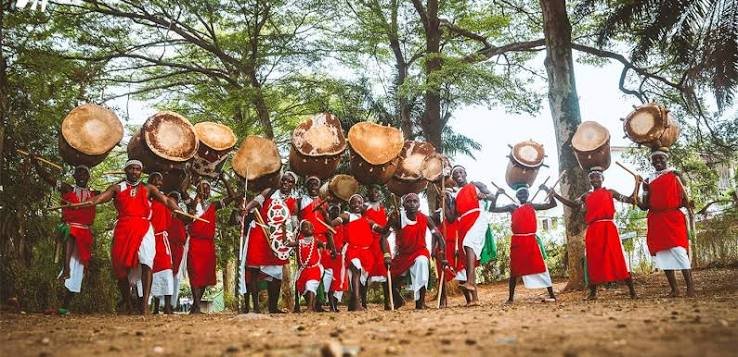
A visit to the Gishora Drummers Sanctuary in Burundi is particularly memorable because drumming here is much more than musical entertainment. The royal drum has historically carried profound cultural and political significance within Burundi. Known broadly as ingoma, the drum became closely associated with kingship, authority, and collective identity. During the period of the Burundian monarchy, drums were connected to important royal and seasonal ceremonies. The traditions surrounding them developed into highly specialized cultural practices preserved by communities of ritual drummers and guardians. Today, visitors can experience this heritage through energetic performances that combine synchronized drumming with dancing, songs, and impressive physical movements.
Burundi’s ritual dance of the royal drum was inscribed in 2014 on UNESCO’s Representative List of the Intangible Cultural Heritage of Humanity. UNESCO describes the tradition as combining synchronized drumming with dance, heroic poetry and traditional songs and notes its importance to Burundian heritage and identity. The performance traditionally uses multiple drums arranged around a central drum, while individual performers may dance to the rhythm created by the ensemble. The tradition is passed between generations through practice as well as education, helping preserve an important element of Burundi’s cultural identity.
For travelers exploring Burundi with Gabba Gorilla Expeditions, Gishora can form an important part of a broader cultural and nature-based itinerary. We can incorporate the sanctuary into privately arranged Burundi journeys that explore Gitega and other destinations before continuing toward additional attractions within Burundi or combining the country with neighboring Rwanda, Uganda and other East African destinations. This makes Gishora particularly appealing to travelers who want their African journey to include more than wildlife sightings. It introduces visitors to the people, traditions and historical narratives that give the region its distinctive character.
Where Is Gishora Drummers Sanctuary?
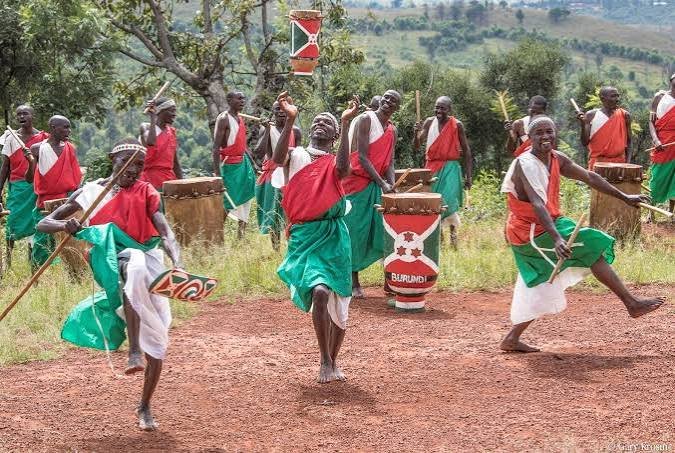
The Gishora Drummers Sanctuary is situated on Gishora Hill in the Gitega area of central Burundi. UNESCO’s description of the Royal Residence of Gishora places the historic site in Gitega and identifies the hill as a sacred place associated with Burundi’s former kingdom. The location makes Gishora particularly convenient for travelers already visiting Gitega and its surrounding cultural attractions.
The landscape itself contributes significantly to the experience. Gishora is not simply a modern performance hall where visitors arrive, watch a show and leave. The setting forms part of the cultural narrative. The hill, traditional structures, sacred drum sanctuary and former royal spaces help visitors visualize the relationship between the monarchy, ceremonial traditions and the people responsible for safeguarding the drums.
This is one reason we recommend approaching a Gishora Drum Sanctuary tour as a cultural experience rather than merely another attraction to tick off a Burundi sightseeing list. Spending enough time at the site allows travelers to listen to explanations about the drums, observe the traditional structures, understand aspects of the royal compound and then experience the drumming performance with greater historical context.
When Gabba Gorilla Expeditions designs a private Burundi itinerary, Gishora can be scheduled with enough time for guests to experience the site without feeling unnecessarily rushed. Depending on the wider journey, it can be incorporated into a Gitega cultural excursion or a longer itinerary exploring Burundi’s landscapes, communities and other attractions.
The History of Gishora and Burundi’s Royal Heritage
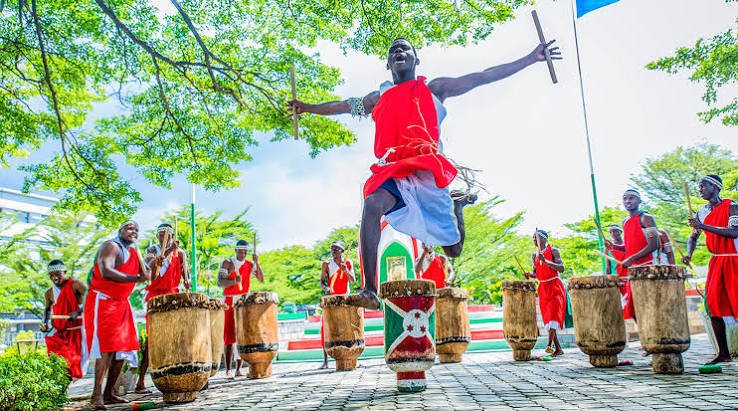
Understanding the Gishora Drummers Sanctuary requires looking beyond the performance and examining the history of Gishora itself. The site forms part of Burundi’s royal heritage, and its historical importance extends beyond drumming.
According to the Royal Residence of Gishora entry submitted by Burundi to UNESCO’s World Heritage Tentative List, the royal residence on Gishora Hill was founded by King Ntare Rugamba during the first half of the nineteenth century, following his victory against the rebel chief Ntibirangwa. The royal residence was associated with the annual Umuganuro, the ceremonial festival connected with the sowing season, in which ritual specialists and guardians of the Gishora drums participated.
This point deserves clarification because travel descriptions of Gishora sometimes give differing accounts of its foundation. Some modern tourism sources associate the sanctuary specifically with King Mwezi Gisabo and describe its establishment following a royal victory. However, the current UNESCO Tentative List documentation for the wider Royal Residence of Gishora attributes the foundation of the royal residence to Ntare Rugamba in the first half of the nineteenth century. For a historically responsible travel guide, it is therefore useful to distinguish between the wider royal residence, the development of the drum sanctuary and the oral traditions associated with later Burundian kings.
What remains clear is that Gishora’s importance cannot be separated from the history of Burundi’s monarchy. The physical organization of the royal residence reflected different functions and degrees of access. According to UNESCO’s description, the first courtyard or forecourt, known as the Intangaro, contained the sanctuary of the sacred drums. Another major court contained the royal residence, or Ingoro, while other sections served specific members and functions of the royal establishment.
The organization of the compound gives modern travelers a glimpse into the sophisticated cultural system surrounding Burundi’s former monarchy. Architecture was not merely functional. Space helped communicate hierarchy, authority, ceremony and access. When travelers walk through the Gishora area today, they are therefore entering a landscape whose cultural significance developed over generations.
This historical dimension transforms a visit to Gishora Drummers Sanctuary from a simple musical performance into a deeper exploration of Burundi’s political, spiritual and social past.
Why Drums Are So Important in Burundian Culture
To appreciate the Gishora Drummers Sanctuary, travelers first need to understand that drums in Burundi historically represented far more than music. In many modern societies, drums are viewed principally as musical instruments. Within Burundi’s royal traditions, however, the drum carried layers of ceremonial, political and symbolic meaning.
The word ingoma is closely associated with the drum, but its cultural meaning extends into ideas surrounding authority and the kingdom itself. Historically, royal drums were associated with the monarchy and important ceremonial occasions. Their sound could signify moments of collective importance and reinforce relationships between political authority, ritual specialists and communities.
Burundi’s royal drumming traditions also combined sound with other forms of expression. The spectacle includes dance, traditional songs and heroic poetry. This combination creates an experience in which rhythm is only one component of a much broader cultural performance.
The physical energy of the performers is often what immediately captures the attention of visitors. Drummers may carry substantial drums, maintain demanding synchronized rhythms and combine their playing with dance and athletic movements. Yet concentrating only on the spectacle risks missing the deeper meaning. Behind the performance lies a tradition of specialized knowledge, discipline and cultural transmission.
UNESCO’s recognition of the Ritual Dance of the Royal Drum emphasizes this wider significance. The organization notes that the tradition contributes to social cohesion and provides a means of bringing people of different generations and backgrounds together. The knowledge and skills associated with the performance, including specialized drum-making practices, are transmitted through generations.
For visitors, this creates a valuable opportunity to experience culture not as something frozen behind museum glass but as something actively performed, taught and reinterpreted.
The Ritual Dance of the Royal Drum
One of the major reasons travelers visit the Gishora Drummers Sanctuary is to witness Burundi’s extraordinary royal drumming tradition. The combination of sound, movement and synchronization can make the performance one of the most memorable cultural encounters during a journey through Burundi.
The experience usually begins with anticipation rather than immediate spectacle. The drummers prepare themselves and their instruments, and visitors gradually become aware that the arrangement of performers and drums follows an established pattern. Once the performance begins, individual rhythms combine into a much larger wall of sound.
UNESCO explains that the ritual dance of the royal drum traditionally involves numerous drums arranged in a semicircle around a central drum. Several drums maintain a continuous rhythm while others follow the cadence established by the central drum. Individual performers may then dance within or around the ensemble.
The result is powerful because sound and movement become inseparable. A drummer is not necessarily standing still behind an instrument in the way international visitors might expect from a conventional musical performance. The human body becomes part of the presentation through movement, balance, strength and dance.
Traditional songs and heroic poetry further enrich the performance. Together these elements communicate stories, values and collective memories that cannot be adequately understood by describing the experience simply as a “drumming show.”
The royal drum tradition historically appeared during important events and continues to be performed during national and local celebrations and when welcoming important visitors. UNESCO states that the tradition has become an important means of transmitting cultural, social and political messages while strengthening unity and social cohesion.
This makes a Burundi drumming experience at Gishora particularly valuable to cultural travelers. Visitors witness a tradition that continues to carry meaning in contemporary Burundi rather than a performance invented exclusively for tourism.
UNESCO Recognition of Burundi’s Royal Drum Tradition
The connection between UNESCO and the Gishora Drummers Sanctuary is frequently misunderstood online, so travelers should understand exactly what has received international recognition.
In 2014, UNESCO inscribed the Ritual Dance of the Royal Drum of Burundi on the Representative List of the Intangible Cultural Heritage of Humanity. This recognition concerns the living cultural tradition of royal drumming rather than declaring Gishora Drum Sanctuary itself a UNESCO World Heritage Site.
The distinction is important.
UNESCO’s Intangible Cultural Heritage program recognizes traditions, knowledge, practices and cultural expressions passed between generations. Burundi’s royal drum ritual qualified because it represents a living cultural tradition with strong connections to identity, community and intergenerational transmission.
The Royal Residence of Gishora, meanwhile, appears separately on Burundi’s UNESCO World Heritage Tentative List as a cultural property. A Tentative List is an inventory of properties a country may consider for future World Heritage nomination. Being included on this list should not be described as equivalent to full inscription on the UNESCO World Heritage List.
For Gabba Gorilla Expeditions, maintaining this distinction is important because responsible cultural tourism begins with accurate information. Travelers deserve to understand what UNESCO recognition means rather than encountering exaggerated descriptions created simply for marketing purposes.
The international recognition nevertheless demonstrates the extraordinary cultural significance of Burundi’s drumming tradition. It highlights a practice that has survived major political and social transformations while remaining an important expression of national identity.
Who Are the Batimbo Drummers?
At the heart of the Gishora Drummers Sanctuary are the traditional drummers commonly referred to as the Batimbo or Abatimbo. They are not simply musicians hired to perform for visitors. Historically, specialist drumming families played important roles as guardians and practitioners of royal drum traditions.
UNESCO’s documentation concerning the Royal Residence of Gishora identifies ritualists associated with the Banyagisaka lineage as custodians of the heritage connected with the royal court. Their knowledge includes both drum-making and the specialized performance of the drums, with traditions transmitted through generations.
Understanding this background changes the way a visitor perceives a performance. What initially appears to be an impressive combination of music and athletic dance becomes a visible expression of inherited cultural knowledge.
Transmission is particularly important to living heritage. Cultural traditions survive when younger generations learn not merely how to reproduce movements but also why those movements matter, how instruments are made and treated, how rhythms relate to one another and what responsibilities accompany participation.
This is one reason cultural tourism can contribute positively when conducted respectfully. Travelers who pay for locally managed experiences, listen to community interpretation and treat performers as cultural custodians rather than props for photographs can help reinforce the economic and social value of preserving traditional knowledge.
A well-guided Gishora cultural tour should therefore give visitors an opportunity to learn about the people behind the drums rather than presenting the performance without context.
The Sacred Drums of Gishora
Among the most intriguing elements of the Gishora royal tradition are the sacred drums associated with the sanctuary.
UNESCO’s Tentative List description identifies two sacred drums known as Ruciteme and Murimirwa, housed within the drum sanctuary. The documentation describes them resting horizontally while other drums are positioned vertically.
The importance of such drums goes far beyond their physical construction. Within the royal cultural system, sacred drums carried ritual meaning and were connected to the authority and ceremonies of the monarchy.
The sanctuary itself therefore had a specialized function. It was not simply a storage room for musical instruments. It formed part of a ritual landscape in which particular objects, spaces, people and ceremonies interacted.
For contemporary travelers, understanding this distinction encourages respectful behavior. Sacred cultural objects should not automatically be treated as ordinary tourist exhibits. Visitors should follow the instructions of their local hosts regarding where they may enter, what they may touch and when photography is appropriate.
Gabba Gorilla Expeditions encourages travelers to approach sites such as Gishora with curiosity but also cultural sensitivity. Asking questions is welcome, but respecting local guidance is essential.
Traditional Architecture at Gishora
Although most travelers initially hear about Gishora because of its drummers, the traditional architecture of the Royal Residence of Gishora deserves serious attention.
UNESCO’s Tentative List documentation emphasizes the architecture and construction techniques of the residence. Traditional plant materials, woven structural elements, papyrus and thatched roofing form part of an architectural system adapted to local knowledge and cultural requirements.
The spatial organization of the royal compound is equally significant. Different courtyards and structures corresponded to different functions, including ceremonial spaces, royal residential areas, areas associated with the sacred drums and spaces serving members of the royal establishment.
This provides a fascinating architectural complement to the musical heritage. Visitors are not merely listening to traditions associated with a former kingdom; they are encountering architectural forms that help communicate how royal space itself was structured.
Travelers interested in architecture, anthropology, African history, archaeology and cultural landscapes can therefore find Gishora particularly rewarding.
What to Expect When Visiting Gishora Drummers Sanctuary
A Gishora Drummers Sanctuary tour is best approached with enough time to understand both the site and the performance. Although exact arrangements can vary, visitors generally come to experience the royal drumming tradition, explore the cultural setting and learn about Gishora’s history.
The sound is often the most immediate impression. Multiple drums played together create a deep rhythmic force that can be felt almost as much as heard. The performance develops through changing patterns, coordinated movements, songs and dance.
Watching from relatively close range makes the physical demands of the performance obvious. The concentration required to maintain synchronization, the energy of the dancing and the physical handling of the drums demonstrate years of practice.
A guided explanation can then add another layer to the experience. Visitors may learn about the historical relationship between drums and kingship, the role of specialist drumming communities, the construction of the traditional compound and the continuing cultural importance of royal drumming.
Photography may form part of a visit, but travelers should always ask before photographing individuals, sacred objects or restricted areas. A respectful visitor experiences Gishora first and photographs it second.
Depending on the arrangements and the wider itinerary, travelers may also have opportunities to speak with performers or guides. These conversations can become some of the most meaningful moments of the visit because they allow guests to move beyond observing culture toward learning directly from the people maintaining it.
Why Visit Gishora Drummers Sanctuary?
There are many reasons to include the Gishora Drummers Sanctuary in a Burundi itinerary, but perhaps the most important is that the experience provides access to an aspect of the country that wildlife-focused travel alone cannot reveal.
Burundi is frequently overlooked on conventional East African tourist circuits. Travelers often concentrate on gorilla trekking in Uganda and Rwanda or the large savannah reserves of Kenya and Tanzania. Yet the wider region also contains remarkable cultural landscapes, historical sites and living traditions.
Gishora demonstrates why Burundi deserves a place within that broader East African travel story.
For history enthusiasts, the sanctuary opens a window into Burundi’s monarchy and royal ceremonial system. For cultural travelers, it offers an opportunity to encounter one of the country’s most recognizable artistic traditions. For photographers, the combination of movement, traditional drums, architecture and landscape creates compelling visual opportunities when photography is permitted. For families and educational groups, the sanctuary can provide an engaging introduction to African cultural heritage. For travelers already exploring Rwanda or other neighboring countries, Burundi can add an entirely different dimension to a regional journey.
Most importantly, Gishora offers an experience rooted in people.
Many unforgettable African journeys are remembered not only because of landscapes and animals but because of conversations, stories, ceremonies, food, music and encounters with communities. The Gishora drumming experience can become precisely that kind of memory.
Gishora Drummers Sanctuary and Gitega
Gishora’s proximity to Gitega makes the sanctuary particularly suitable for inclusion in a cultural tour of central Burundi. Rather than visiting the sanctuary in isolation, travelers can use Gitega as a base from which to explore the country’s history and culture more broadly.
Gitega occupies an important place in contemporary Burundi and provides access to cultural attractions and surrounding highland landscapes. Incorporating Gishora into a wider Gitega experience creates a more complete narrative. Travelers can begin to understand the relationship between Burundi’s historical kingdom, modern national identity, material culture and living performing traditions.
A carefully designed itinerary might dedicate part of a day to Gishora while allowing additional time for Gitega and other nearby experiences. Travelers with more time can spend a night in the region rather than treating central Burundi merely as a transit point.
This slower approach is particularly suitable for the style of customized travel offered by Gabba Gorilla Expeditions. Instead of trying to include as many attractions as possible in the shortest period, we can design itineraries around the interests of individual travelers. Guests particularly interested in culture and history may spend more time around Gitega, while travelers combining Burundi with primate or wildlife experiences can integrate Gishora into a broader regional safari.
Best Time to Visit Gishora Drummers Sanctuary
The Gishora Drummers Sanctuary can potentially be incorporated into Burundi itineraries at different times of the year, but the best period depends on the traveler’s wider itinerary and interests.
Because Gishora is fundamentally a cultural attraction rather than a wildlife destination dependent on seasonal animal movements, there is greater flexibility when planning a visit. Weather conditions, road travel, other destinations on the itinerary and confirmed performance arrangements should nevertheless be considered.
Travelers combining Gishora with nature experiences may prefer periods offering more favorable conditions for outdoor exploration. Those primarily interested in culture may place greater emphasis on confirming that the drummers and local guides are available on the intended date.
Rather than relying on assumed performance times found on older travel blogs, visitors should confirm current arrangements before traveling. Cultural sites can adjust schedules, fees and visitor procedures.
When booking a Burundi safari with Gabba Gorilla Expeditions, these practical arrangements can be incorporated into the itinerary so that Gishora fits naturally into the journey rather than being treated as an uncertain last-minute excursion.
How to Get to Gishora Drummers Sanctuary
The sanctuary’s location near Gitega makes road transport the most practical method of reaching it for most international visitors.
Travelers already staying in Gitega have a relatively convenient journey to the Gishora area. Those traveling from other parts of Burundi will generally reach the sanctuary as part of a private road itinerary.
A privately arranged vehicle offers several advantages. It allows the visit to be coordinated with confirmed local arrangements, provides flexibility for other attractions and eliminates the inconvenience of trying to organize multiple transfers independently.
With Gabba Gorilla Expeditions, transportation can form part of a wider private Burundi safari rather than being booked as an isolated transfer. This is especially useful for international travelers unfamiliar with local roads, languages and travel logistics.
Combining Gishora with a Burundi Safari
One of the best ways to experience the Gishora Drummers Sanctuary is to include it within a longer Burundi journey.
Burundi’s relatively compact geography allows travelers to combine cultural experiences with landscapes, urban exploration and nature-focused destinations without needing the extremely long overland transfers found in some larger African countries.
A carefully planned itinerary can begin with arrival and orientation before continuing toward central Burundi and Gitega. Gishora can then become the cultural centerpiece of this section of the journey.
Travelers interested in a broader regional experience can also combine Burundi with Rwanda and Uganda. Such journeys can create a fascinating contrast between royal cultural traditions, highland landscapes, rainforest environments and primate encounters.
For example, a traveler might experience Burundi’s royal drumming heritage before continuing toward Rwanda for additional cultural and nature experiences and then Uganda for mountain gorilla trekking. Alternatively, the journey can operate in the opposite direction, using Gishora as an enriching cultural conclusion after a wildlife-focused safari.
Gabba Gorilla Expeditions can customize the sequence according to international flight arrangements, border requirements, available travel time and individual interests.
Combining Gishora Drummers Sanctuary with Gorilla Trekking
For travelers booking with Gabba Gorilla Expeditions, one particularly exciting option is combining a Burundi cultural journey with gorilla trekking elsewhere in the region.
Mountain gorilla trekking and the Gishora drumming experience are completely different encounters, which is precisely why they work so well together.
A gorilla trek takes travelers into a rainforest environment where the emphasis is on nature, conservation and a highly controlled wildlife encounter. Gishora, in contrast, immerses visitors in human history, royal traditions, music, dance and cultural memory.
Together, they create a more multidimensional understanding of the Great Lakes and East African region.
International travelers often fly long distances to reach this part of Africa. Combining several complementary experiences can therefore make excellent use of the journey. Rather than seeing the region exclusively through wildlife, visitors encounter both its extraordinary biodiversity and its human cultural heritage.
Gabba Gorilla Expeditions can design private regional journeys connecting Burundi with suitable gorilla trekking destinations according to current entry requirements, permit availability and travel conditions.
Responsible Cultural Tourism at Gishora
Visiting the Gishora Drummers Sanctuary carries responsibilities as well as opportunities.
Cultural tourism works best when local communities remain central to the interpretation and economic benefits of their heritage. Visitors should therefore approach the sanctuary as guests rather than consumers of a performance.
Respect begins with listening. When local guides explain the history of the drums or the meaning of a particular space, giving those explanations attention is part of the experience.
Photography should be handled thoughtfully. Always follow instructions regarding photography and video, especially around sacred objects and during culturally significant moments. Permission should be requested before taking close portraits of individuals.
Visitors should also avoid treating cultural objects as props. A drum or ceremonial item may have meanings invisible to an outsider. If you are invited to interact with an object or participate in an activity, follow the guidance given by the hosts rather than assuming participation is automatically permitted.
Responsible tourism also means recognizing that the performers are skilled practitioners. Their work represents training, inherited knowledge and physical discipline. Paying appropriate fees and supporting locally managed cultural experiences helps attach tangible value to preservation.
Gishora for Photographers and Cultural Travelers
For photographers, the Gishora Drummers Sanctuary presents an extraordinary combination of human movement, expression, architecture and landscape.
The challenge is to capture the experience without allowing photography to become a barrier between the traveler and the culture being presented.
The synchronized movement of the drummers creates opportunities for dynamic images. Individual portraits can communicate concentration and energy, while wider compositions can show the relationship between performers, drums and traditional structures.
However, permission remains essential.
Cultural photographers should also look beyond the most dramatic moments. Details of instruments, architecture, hands, movement and the landscape surrounding the sanctuary can tell a richer story than a collection consisting only of action photographs.
Travelers who are primarily interested in photography should inform Gabba Gorilla Expeditions during itinerary planning so sufficient time can be allocated to cultural destinations rather than rushing through them.
How Long Should You Spend at Gishora?
For most travelers, Gishora can comfortably form part of a half-day cultural excursion, although the amount of time required depends on the confirmed performance and guiding arrangements.
Travelers with a strong interest in history, anthropology, music or photography may prefer a slower visit.
The mistake is assuming that the only purpose of visiting Gishora is to watch the drummers. The performance is certainly the highlight, but understanding the architecture, historical setting and meaning of the drums makes the experience substantially richer.
A longer stay in the Gitega region also allows visitors to place Gishora within the broader cultural landscape of Burundi.
What to Wear When Visiting Gishora Drummers Sanctuary
Comfortable and respectful clothing is appropriate for visiting Gishora.
Because the experience may involve walking around the sanctuary and spending time outdoors, lightweight clothing and comfortable walking shoes are useful. A sun hat, sunglasses and drinking water can be helpful during warmer conditions, while a light rain jacket may be worth carrying depending on the season.
Travelers should remember that Gishora is a cultural heritage site. Clothing that is comfortable yet reasonably modest demonstrates respect for local norms and makes interaction with communities more natural.
Photography equipment, sunscreen and a small day bag may also be useful, but travelers should avoid carrying unnecessary valuables.
Is Gishora Drummers Sanctuary Worth Visiting?
For travelers interested in African history, living traditions, music, dance and meaningful cultural encounters, Gishora Drummers Sanctuary is one of the most rewarding cultural stops to consider in Burundi.
Its value lies not simply in how loud or energetic the performance is. The real importance of Gishora emerges from the combination of landscape, monarchy, architecture, sacred objects, inherited knowledge and contemporary cultural expression.
The drumming provides the emotional entry point. History provides the context.
Visitors who arrive simply expecting entertainment may leave impressed by the performance. Visitors who arrive understanding the history are more likely to leave appreciating why the drums matter.
That distinction is central to the type of cultural tourism Gabba Gorilla Expeditions seeks to encourage.
Why Visit Gishora with Gabba Gorilla Expeditions?
Our approach is particularly suitable for international travelers who want a more personalized journey. Instead of following a rigid mass-tourism schedule, guests can combine cultural heritage with nature, photography, history and regional safari experiences.
A traveler primarily interested in culture may want additional time around Gitega. Another guest may want Gishora incorporated into a Burundi highlights journey. Others may be traveling through several countries and want to combine Burundi with Rwanda or Uganda and eventually include gorilla trekking.
Gabba Gorilla Expeditions can structure these experiences into one logical itinerary.
Our role goes beyond moving travelers from one attraction to another. Good safari planning involves understanding distances, arranging suitable transportation, coordinating local experiences and ensuring that each destination contributes meaningfully to the overall journey.
Why Choose Gabba Gorilla Expeditions for a Burundi Cultural Safari?
Choosing Gabba Gorilla Expeditions for your Burundi journey means choosing a safari designed around personal interests rather than a generic itinerary. We understand that travelers visiting Gishora are often looking for more than sightseeing. They want to understand the stories behind the destinations they visit.
Our customized itineraries can combine Gishora Drummers Sanctuary, Gitega, Burundi’s cultural attractions and regional East African safari experiences according to your preferred travel style.
Private transportation provides flexibility and comfort, while thoughtful itinerary planning reduces unnecessary backtracking. Cultural experiences are scheduled with adequate time so travelers can engage with destinations instead of merely collecting photographs.
For guests combining Burundi with gorilla trekking, we can also structure the journey around the relevant trekking arrangements and regional logistics. This creates a seamless progression from Burundi’s cultural heritage to some of Africa’s most extraordinary natural environments.
Whether you are planning a dedicated Burundi cultural tour, a photographic journey, a private East African holiday or a combined Burundi and gorilla trekking safari, Gabba Gorilla Expeditions can tailor the experience to your travel dates and interests.
Frequently Asked Questions About Gishora Drummers Sanctuary
What is Gishora Drummers Sanctuary?
Gishora Drummers Sanctuary, more commonly called Gishora Drum Sanctuary, is a historic cultural site near Gitega associated with Burundi’s royal drum traditions. Visitors can learn about the country’s royal heritage, traditional drums, cultural custodians and ritual drumming practices.
Where is Gishora Drummers Sanctuary located?
Gishora is situated on Gishora Hill in the Gitega area of central Burundi, making it convenient to combine with a visit to Gitega.
Is Gishora Drum Sanctuary a UNESCO World Heritage Site?
No. This is an important distinction. Burundi’s Ritual Dance of the Royal Drum was inscribed on UNESCO’s Representative List of the Intangible Cultural Heritage of Humanity in 2014. The Royal Residence of Gishora is separately included on Burundi’s UNESCO World Heritage Tentative List. A Tentative List property is not yet equivalent to an inscribed World Heritage Site.
What happens during a Gishora drumming performance?
Visitors can expect powerful synchronized drumming accompanied by movement, dance and traditional forms of cultural expression. The exact program can vary, and current arrangements should be confirmed before visiting.
Who are the Batimbo?
The Batimbo or Abatimbo are traditional specialist drummers and custodians associated with Burundi’s royal drumming heritage. At Gishora, hereditary knowledge and responsibilities connected with the drums have been transmitted through generations.
What are the sacred drums at Gishora?
UNESCO’s documentation for the Royal Residence of Gishora identifies two sacred drums called Ruciteme and Murimirwa within the drum sanctuary.
How far is Gishora from Gitega?
Gishora Hill is commonly described as being roughly 7 kilometers from Gitega, making the sanctuary accessible as part of a Gitega cultural excursion.
How long does a visit take?
A Gishora experience can generally be incorporated into a half-day excursion, although travelers interested in history, photography and cultural interpretation may prefer additional time.
Can Gishora be combined with a gorilla safari?
Yes. Gabba Gorilla Expeditions can incorporate Burundi into a wider regional journey that continues to suitable gorilla trekking destinations in neighboring countries, subject to current border requirements, trekking permit availability and travel conditions.
Is Gishora suitable for photographers?
Yes. The combination of synchronized drumming, expressive movement, traditional architecture and surrounding landscapes creates excellent photographic opportunities. Visitors should always follow local rules and obtain permission when required.
Is the drumming performed only for tourists?
No. Burundi’s ritual royal drumming is a living cultural tradition that extends beyond tourism. UNESCO notes that royal drum performances continue to feature at national and local celebrations and in welcoming important visitors.
Why are drums important in Burundi?
Historically, royal drums were closely connected with kingship, ceremony, authority and community identity. Their significance extends far beyond their role as musical instruments.
What should I bring to Gishora?
Comfortable footwear, respectful lightweight clothing, drinking water, sun protection and a camera are useful. A light rain jacket can also be helpful depending on the season.
Can Gabba Gorilla Expeditions organize my Gishora visit?
Yes. Gabba Gorilla Expeditions can incorporate Gishora into a customized Burundi itinerary or a longer multi-country East African journey, with transport and itinerary logistics arranged according to the final safari program.
Conclusion – Discover the Living Rhythm of Burundi at Gishora Drummers Sanctuary
The Gishora Drummers Sanctuary offers travelers something increasingly valuable in modern tourism: an opportunity to experience a cultural tradition in the landscape from which its history emerged.
The first drumbeat may capture your attention, but Gishora’s deeper story lies behind the sound. It lies in Burundi’s former kingdom, in the organization of royal space, in sacred drums, in specialist communities entrusted with inherited knowledge, in the physical discipline of the performers and in the continuing transmission of cultural identity between generations.
Burundi’s Ritual Dance of the Royal Drum, recognized by UNESCO as Intangible Cultural Heritage of Humanity, demonstrates the continuing importance of this tradition. Gishora provides a particularly powerful setting in which travelers can begin to understand that heritage.
For international travelers, adding Gishora to a Burundi safari also provides balance. East Africa is famous for gorillas, chimpanzees, lions, elephants, and extraordinary landscapes, but its human history is equally compelling. Combining wildlife experiences with destinations such as Gishora creates a journey that explores both nature and culture.
With Gabba Gorilla Expeditions, your visit can become part of a carefully planned private itinerary through Burundi and the wider region. Whether you want to focus on cultural heritage, combine Gishora with Gitega, extend your journey through Burundi or connect the experience with gorilla trekking in neighboring countries, your itinerary can be customized around your interests and available time.
Come for the famous drums, but take time to understand what they represent.
At Gishora Drummers Sanctuary, every rhythm carries something deeper: memory, identity, kingship, community, and the continuing story of Burundi.

Tell us Exactly what you want
Ready to embark on an Unforgettable adventure in Africa? No idea where to start? No worries, just reach out?

Written by
Timothy
Uganda and Rwanda safari specialist sharing practical destination knowledge and thoughtful planning advice.