

Overview;
Africa is the only continent in the world where travelers can encounter wild gorillas in their natural habitat, making a gorilla trekking safari in Africa one of the most extraordinary wildlife experiences available anywhere on Earth. Hidden within the mist-covered mountains and tropical forests of East and Central Africa are populations of mountain gorillas, eastern lowland gorillas, western lowland gorillas and the extremely rare Cross River gorillas. For travelers wondering where to see gorillas in Africa, however, choosing a destination requires much more than simply identifying countries where gorillas occur. Some destinations offer highly organized gorilla trekking programs, while others contain wild gorilla populations that are difficult or currently impractical for ordinary tourism.
For most international travelers planning their first African gorilla safari, Uganda and Rwanda are the leading destinations for mountain gorilla trekking. Uganda offers gorilla trekking in Bwindi Impenetrable National Park and Mgahinga Gorilla National Park, while Rwanda offers highly organized mountain gorilla trekking in Volcanoes National Park. The Democratic Republic of Congo is biologically exceptional because it contains both mountain gorillas and eastern lowland gorillas, although travelers must carefully consider current park operations, security conditions and official travel advice before planning tourism there.
At Gabba Gorilla Expeditions, we organize tailor-made gorilla trekking safaris for travelers who want to experience Africa’s great apes while enjoying professionally arranged transportation, carefully selected accommodation, knowledgeable safari driver-guides and assistance with gorilla trekking logistics. Whether you are interested in a short Uganda gorilla trekking safari, a luxury Rwanda gorilla safari, a longer Uganda wildlife and primate journey or a combined Uganda and Rwanda itinerary, understanding where gorillas live is the ideal starting point.
Where Can You See Gorillas in Africa?
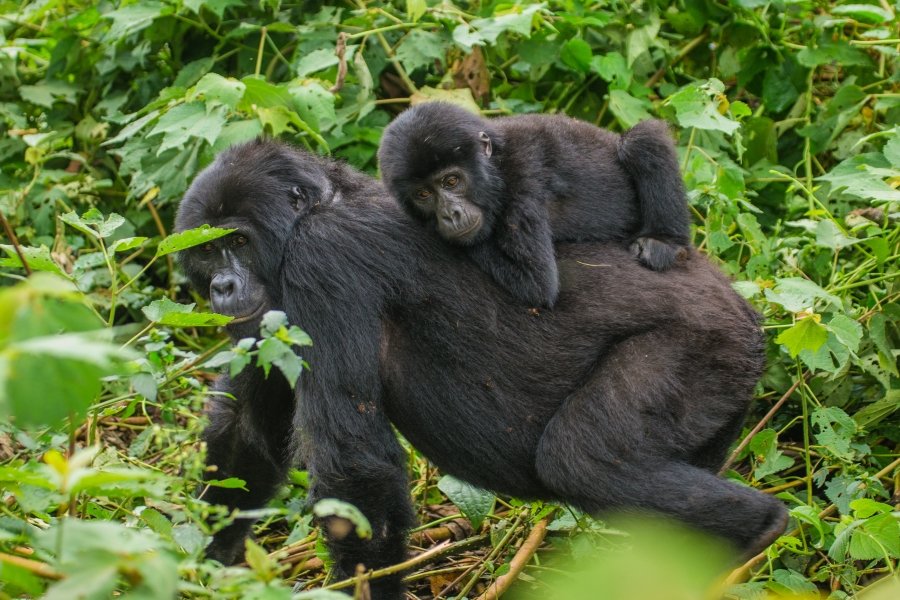
Wild gorillas occur naturally across parts of equatorial Africa. There are two recognized gorilla species the eastern gorilla and western gorilla and these are divided into four subspecies: the mountain gorilla, eastern lowland or Grauer’s gorilla, western lowland gorilla and Cross River gorilla.
For tourism purposes, however, the question of where to see gorillas in Africa is more specific. Travelers generally want destinations where gorillas have been habituated to carefully controlled human visits and where tourism infrastructure makes an encounter realistically possible.
The principal destinations to understand are Bwindi Impenetrable National Park and Mgahinga Gorilla National Park in Uganda, Volcanoes National Park in Rwanda, and the gorilla habitats of the Democratic Republic of Congo. Central African countries such as the Republic of Congo and the Central African Republic are particularly important for western lowland gorillas, while Cross River gorillas survive around the Cameroon-Nigeria border. These destinations offer very different levels and styles of tourism, so they should not be treated as interchangeable.
For the majority of first-time visitors, Uganda and Rwanda provide the most straightforward choices for a dedicated African gorilla trekking safari.
1. Bwindi Impenetrable National Park, Uganda
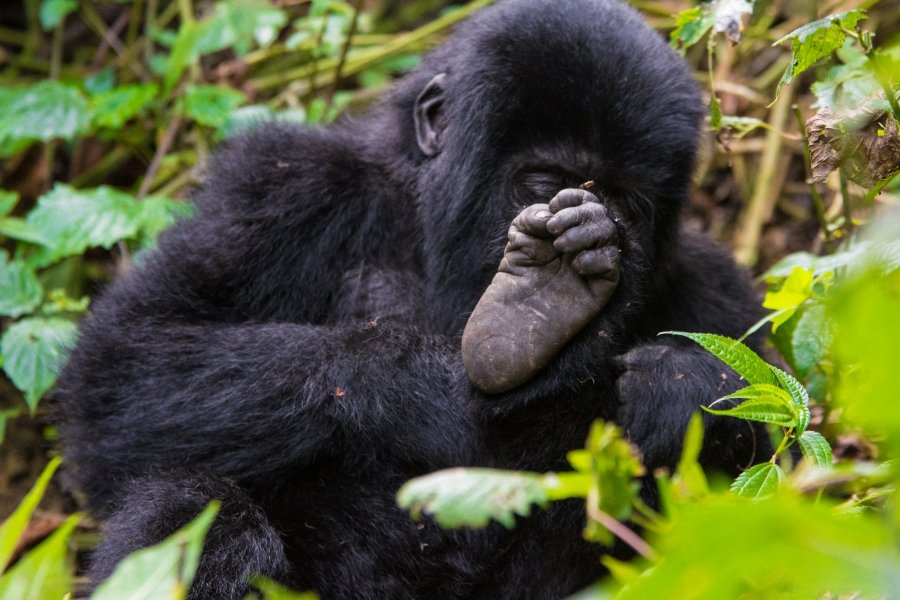
The Leading Gorilla Trekking Destination in Uganda
Bwindi Impenetrable National Park is one of the most famous answers to the question of where to see mountain gorillas in Africa. Situated in southwestern Uganda, close to the borders with Rwanda and the Democratic Republic of Congo, Bwindi protects an extraordinary mountainous rainforest and is internationally renowned for its mountain gorillas.
The experience begins long before visitors actually see a gorilla. Bwindi’s steep hillsides are covered in layers of ancient-looking vegetation, vines, giant ferns, forest trees and thick undergrowth. Mist can hang between the forested ridges in the early morning, giving the landscape the mysterious atmosphere for which African gorilla trekking has become famous.
Gorilla trekking takes place from four principal sectors: Buhoma, Ruhija, Rushaga and Nkuringo. Each sector provides access to different habituated gorilla families and has its own accommodation, terrain and logistical characteristics.
Buhoma Gorilla Trekking Sector
Buhoma is located in the northern part of Bwindi and is historically one of the best-known gorilla trekking areas in Uganda. It has developed an excellent range of safari accommodation and provides access to several habituated gorilla groups.
The area is particularly attractive to travelers looking for an established safari environment where lodges, trekking arrangements and other forest activities can easily be combined.
Ruhija Gorilla Trekking Sector
Ruhija lies in the eastern part of Bwindi and is particularly appealing to travelers interested in combining gorilla trekking with birdwatching and peaceful forest scenery. The high-altitude landscape provides beautiful views across the forested hills, while the area generally feels quieter than some of Bwindi’s busier tourism centers.
Rushaga Gorilla Trekking Sector
Rushaga, in southern Bwindi, is an important center for gorilla tourism and provides access to several habituated gorilla families. Its location also makes it convenient for itineraries approaching Bwindi through southern Uganda or across the Rwanda-Uganda border when border arrangements and itinerary logistics permit.
Rushaga is also strongly associated with Uganda’s Gorilla Habituation Experience, making southern Bwindi particularly interesting for serious primate enthusiasts who want a different type of gorilla encounter.
Nkuringo Gorilla Trekking Sector
Nkuringo is known for dramatic landscapes, challenging terrain and spectacular views toward the Virunga Volcanoes. Gorilla trekking here can involve demanding hiking, but the magnificent scenery makes the area particularly rewarding for active travelers.
Luxury and high-quality lodge options around Nkuringo have also made it attractive for travelers planning a more exclusive luxury gorilla safari in Uganda.
What Is Gorilla Trekking in Bwindi Like?
A typical gorilla trekking morning begins with an early breakfast at your lodge followed by a transfer to the appropriate park visitor center. Uganda Wildlife Authority rangers conduct a briefing explaining trekking procedures, forest behavior and regulations for encountering the gorillas.
Visitors are then allocated to habituated gorilla families and enter the forest with trained ranger guides and trackers.
The trek cannot be predicted precisely because gorillas move freely through the forest. Depending on where a particular family has traveled, reaching the gorillas can require anything from a relatively manageable forest walk to several hours of hiking over steep, muddy and densely vegetated terrain.
This uncertainty is part of the experience.
Trackers search for signs such as nests, feeding remains and movements through vegetation while communicating with teams monitoring the gorillas. Eventually, the forest can suddenly reveal a black shape moving through the leaves.
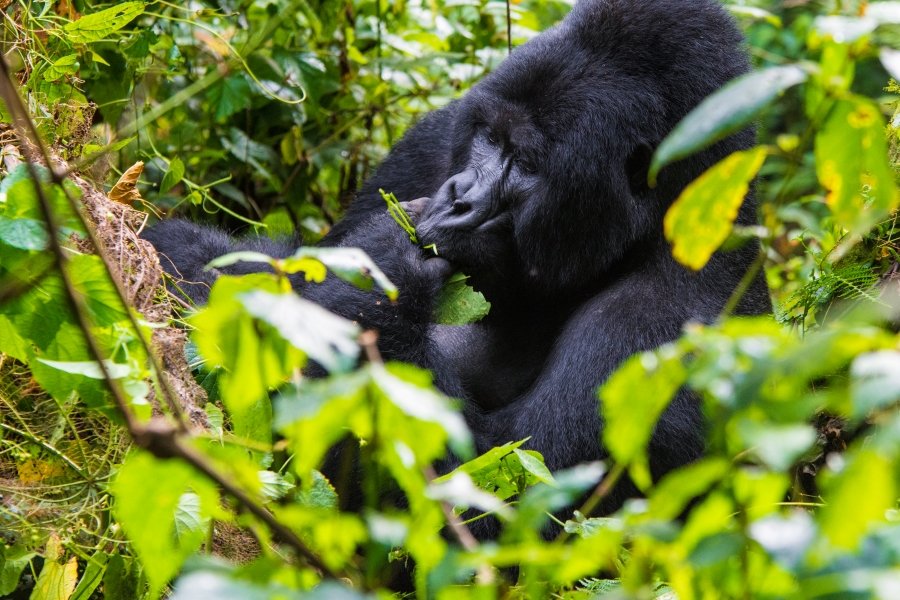
Seeing a mountain gorilla in the wild for the first time is difficult to compare with an ordinary wildlife sighting. A silverback may sit quietly feeding only a short distance away while juveniles climb through branches and females care for infants beneath the forest canopy.
Under standard Uganda gorilla trekking arrangements, visitors normally receive one hour with the habituated gorilla family once it has been located.
Why Choose Bwindi for Gorilla Trekking?
Bwindi is particularly suitable for travelers who want their gorilla encounter to form part of a larger Uganda safari. A trip can combine the forest with chimpanzee trekking, savannah wildlife, boat safaris, birdwatching and cultural experiences.
For example, travelers can combine Bwindi with Queen Elizabeth National Park, where game drives and boat cruises introduce an entirely different ecosystem. Longer itineraries can continue to Kibale National Park for chimpanzee tracking or travel north toward Murchison Falls National Park.
This diversity makes Uganda particularly attractive to travelers who want much more than a standalone gorilla trek.
2. Mgahinga Gorilla National Park, Uganda
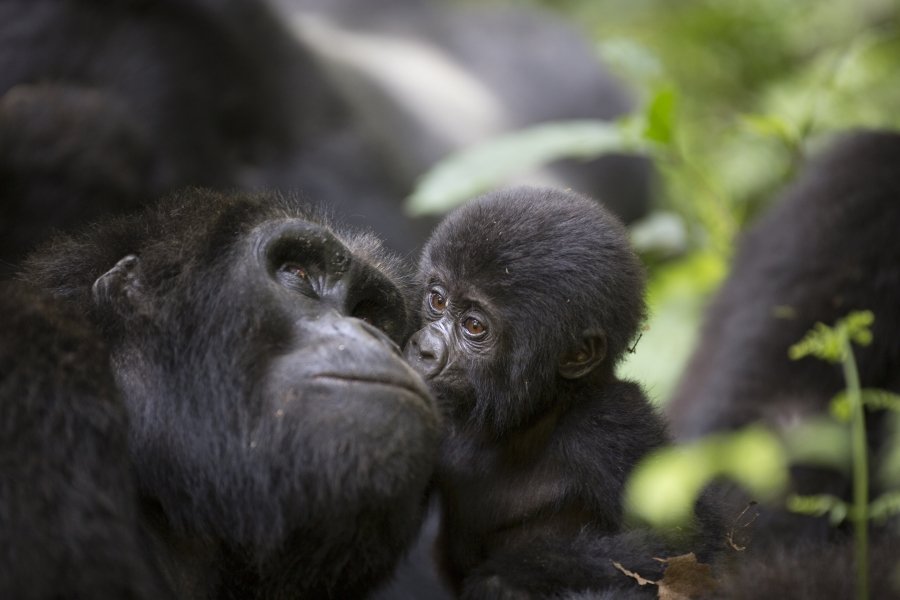
Bwindi receives most of the international attention, but Uganda has another remarkable mountain gorilla destination: Mgahinga Gorilla National Park.
Located in extreme southwestern Uganda, Mgahinga forms part of the wider Virunga landscape extending across Uganda, Rwanda and the Democratic Republic of Congo. The park is dominated by dramatic volcanic peaks and bamboo-covered mountain slopes, producing a noticeably different atmosphere from Bwindi.
For travelers researching the best places to see gorillas in Uganda, Mgahinga should therefore not be overlooked.
Gorilla Trekking in Mgahinga
Gorilla trekking in Mgahinga follows the same fundamental principle as trekking in Bwindi. Visitors attend an early briefing before entering the forest with ranger guides and trackers to locate habituated mountain gorillas.
The volcanic scenery is one of Mgahinga’s defining attractions. Instead of Bwindi’s seemingly endless ridges of dense rainforest, visitors trek beneath the imposing silhouettes of the Virunga Volcanoes.
The park’s relatively compact tourism environment can also create an intimate feeling that appeals to travelers looking for a quieter gorilla safari.
Gorillas and Golden Monkeys
Another major advantage of Mgahinga is the opportunity to combine mountain gorilla trekking with golden monkey tracking.
Golden monkeys inhabit the bamboo forests of the Virunga region and provide an energetic contrast to gorilla trekking. While gorillas frequently spend long periods feeding or resting on the forest floor, golden monkeys move quickly through bamboo and forest vegetation.
A well-designed Mgahinga itinerary can therefore include a gorilla trek on one day and golden monkey tracking on another, creating an excellent short primate safari.
Combining Mgahinga and Bwindi
Gabba Gorilla Expeditions can also design Uganda itineraries combining Mgahinga Gorilla National Park and Bwindi Impenetrable National Park.
Such an itinerary is particularly attractive to serious gorilla enthusiasts, photographers and repeat visitors who want to experience different landscapes rather than simply completing a single trek.
3. Volcanoes National Park, Rwanda
One of Africa’s Most Famous Gorilla Trekking Destinations
Across the border in Rwanda lies Volcanoes National Park, another world-famous destination for seeing mountain gorillas in Africa.
Situated in northwestern Rwanda, Volcanoes National Park protects part of the Virunga Mountains and provides a spectacular setting of bamboo forest, montane vegetation and enormous volcanic peaks.
Rwanda has developed a strongly organized, premium approach to gorilla tourism, making Volcanoes National Park especially attractive to travelers seeking a luxury gorilla trekking safari in Africa.
Getting to Volcanoes National Park
One of Rwanda’s biggest advantages is accessibility.
International travelers generally arrive through Kigali and continue by road toward Musanze and Volcanoes National Park. Compared with many remote African wildlife destinations, the journey is relatively straightforward.
This accessibility makes it possible to design relatively short gorilla itineraries. Travelers with limited time can arrive in Rwanda, travel to the Volcanoes region, trek gorillas and continue with other activities without requiring an exceptionally long domestic journey.
It is one reason Rwanda has become particularly popular among luxury travelers, business travelers adding a safari to a longer African journey, honeymooners and visitors with restricted vacation time.
The Gorilla Trekking Experience in Rwanda
Gorilla trekking begins with an early morning briefing around the park headquarters at Kinigi. Visitors are organized into groups and allocated to habituated gorilla families before entering the forest with professional guides and trackers.
The trek may pass through farmland near the edge of the protected area before ascending into bamboo and montane forest.
As in Uganda, the duration varies because mountain gorillas move naturally through their habitat.
Once a habituated family has been found, standard trekking arrangements allow visitors to spend a controlled period observing the gorillas while guides interpret their behavior.
The surroundings can be magnificent. Gorillas may appear among bamboo stems with the slopes of the Virunga Mountains rising above the forest.
Why Choose Rwanda for Gorilla Trekking?
Rwanda is especially attractive when convenience, luxury and shorter travel distances are priorities.
High-end lodges around Volcanoes National Park have helped establish the region as one of Africa’s premier luxury primate destinations. Private transfers, excellent hospitality and carefully designed lodge experiences can turn the gorilla trek into part of a sophisticated high-end African journey.
Travelers can also extend their Rwanda safari to Nyungwe National Park for chimpanzees and other primates, Akagera National Park for savannah wildlife, or Lake Kivu for relaxation.
A Rwanda gorilla safari therefore does not have to end after the trek.
Uganda vs Rwanda: Where Is the Best Place to See Gorillas in Africa?
For many travelers, the real question is not simply where gorillas can be found. It is:
Should I see gorillas in Uganda or Rwanda?
There is no universal answer because both countries provide exceptional mountain gorilla experiences.
Uganda is particularly appealing to travelers wanting a broader wildlife journey. Gorilla trekking can naturally be combined with chimpanzee tracking, game drives, boat cruises and multiple national parks. Uganda also provides two separate mountain gorilla destinations—Bwindi and Mgahinga.
Rwanda appeals strongly to travelers prioritizing efficient road connections, premium accommodation and compact itineraries. Volcanoes National Park’s proximity to Kigali makes it particularly convenient for shorter luxury safaris.
The gorillas themselves should not be viewed as “better” in one country. Mountain gorillas move naturally within their territories, and every habituated family has its own social composition and behavior.
The better destination depends on your time, budget, desired accommodation level, other wildlife interests and overall travel style.
Gabba Gorilla Expeditions can design itineraries around these differences rather than recommending one destination to every traveler.
4. Mountain Gorillas in the Democratic Republic of Congo
The Democratic Republic of Congo is enormously important to gorilla conservation. The country contains habitat for both mountain gorillas and eastern lowland, or Grauer’s, gorillas.
Virunga National Park forms part of the transboundary Virunga landscape shared with Uganda and Rwanda and historically has been one of Africa’s remarkable mountain gorilla destinations.
However, Congo travel must always be approached differently from Uganda and Rwanda because security and park access can change.
Travelers should never assume that a historically available gorilla trek is currently operating. Park announcements, official travel advice and current local conditions should be verified before constructing an itinerary.
As of 2026, Virunga National Park states that its gorilla and Nyiragongo treks are closed until further notice.
Gabba Gorilla Expeditions therefore recommends treating Uganda and Rwanda as the primary options when planning a currently dependable mountain gorilla trekking itinerary, while Congo should only be considered when official park operations and security conditions permit.
5. Eastern Lowland Gorillas in the Democratic Republic of Congo
Travelers researching where to see gorillas in Africa should understand that mountain gorillas are only one gorilla subspecies.
The Democratic Republic of Congo is also home to the eastern lowland gorilla, commonly called the Grauer’s gorilla.
These gorillas are physically impressive and are considered the largest gorilla subspecies. Their habitat lies within eastern DRC, including important protected landscapes such as Kahuzi-Biega National Park.
Historically, Kahuzi-Biega National Park has been the most important tourism destination for seeing habituated eastern lowland gorillas in their natural environment.
The experience is different from trekking mountain gorillas in the high-altitude forests of Uganda and Rwanda. Vegetation, elevation, gorilla ecology and landscapes give the trek a distinct character.
However, current access must again be emphasized. As of 2026, Kahuzi-Biega’s official tourism information states that the park is temporarily closed to visitors. Travelers interested in future Grauer’s gorilla trekking should therefore check current official park information rather than relying on older itineraries published online.
6. Western Lowland Gorillas in Africa
Travelers who want to move beyond the classic Uganda-Rwanda mountain gorilla circuit can consider the forests of Central Africa, where western lowland gorillas occur.
Western lowland gorillas have a much wider geographic distribution than mountain gorillas. They occur in countries including the Republic of Congo, Central African Republic, Cameroon, Equatorial Guinea and Gabon.
These gorillas occupy lowland tropical forests, including remote swamp forests and rainforest clearings known as bais.
A western lowland gorilla safari can therefore feel completely different from mountain gorilla trekking.
Instead of climbing mist-covered volcanic slopes, travelers may enter humid Congo Basin rainforest where wildlife movements are strongly influenced by fruiting trees, swamp habitats and forest clearings.
These trips generally appeal to experienced wildlife travelers, primate enthusiasts, conservation-minded visitors and photographers looking for something beyond the standard East African safari circuit.
7. Republic of Congo
The Republic of Congo, sometimes called Congo-Brazzaville to distinguish it from the Democratic Republic of Congo, is an important destination for western lowland gorillas.
Its immense forests form part of the Congo Basin, one of Earth’s great tropical wildernesses.
A gorilla journey here feels very different from Uganda or Rwanda. Infrastructure is more limited, distances can be substantial and the rainforest environment can feel genuinely remote.
This is not necessarily a disadvantage.
For experienced safari travelers, remoteness is precisely the attraction. Western lowland gorilla tracking can be incorporated into a broader rainforest expedition focused on primates, forest elephants, birds and the extraordinary ecology of the Congo Basin.
8. Central African Republic
The Central African Republic also contains important western lowland gorilla habitat, particularly within the wider Dzanga-Sangha landscape.
The forests of this region are famous for their extraordinary biodiversity and large rainforest clearings where wildlife may gather.
However, anyone considering travel to the Central African Republic must carefully investigate current security conditions, travel advisories, access arrangements and tourism operations.
It is a destination for specialist expedition planning rather than an obvious substitute for Uganda or Rwanda.
9. Gabon
Gabon contains extensive tropical rainforest and populations of western lowland gorillas.
The country has protected substantial forest ecosystems through its network of national parks, creating important habitat for gorillas, forest elephants, chimpanzees and numerous other Central African species.
However, seeing gorillas in a country where gorillas occur naturally is not necessarily the same thing as participating in the predictable habituated gorilla trekking model familiar from Uganda and Rwanda.
Travelers choosing Gabon are often interested in the wider rainforest ecosystem rather than making gorillas the only objective of the safari.
This distinction is important when comparing African gorilla destinations.
10. Cameroon
Cameroon is particularly interesting because it contains western gorilla habitat and is associated with one of the rarest great ape populations on Earth—the Cross River gorilla.
Cross River gorillas inhabit rugged forests around the Cameroon-Nigeria border.
Their extreme rarity and elusive nature mean they should not be viewed as a conventional gorilla trekking tourism product. Conservation rather than tourism access is the overriding priority.
For travelers whose main goal is a reliable close encounter with habituated wild gorillas, Uganda or Rwanda is a much more appropriate choice.
11. Nigeria and the Cross River Gorilla
Nigeria forms the other side of the Cross River gorilla’s limited range.
These critically endangered gorillas survive in fragmented forest landscapes around the Nigeria-Cameroon border and number only a few hundred individuals.
They are incredibly important from a conservation perspective, but travelers should distinguish between gorilla conservation destinations and gorilla trekking destinations.
You may read that gorillas occur in Nigeria, but this does not mean Nigeria provides the type of organized daily gorilla trekking available in Bwindi or Volcanoes National Park.
This distinction should guide anyone researching where to see gorillas in Africa.
The Four Types of Gorillas You Can Find in Africa
Understanding gorilla taxonomy makes planning a gorilla safari much easier.
Africa’s gorillas belong to two species and four subspecies.
Mountain Gorilla
The mountain gorilla is the subspecies most strongly associated with organized gorilla trekking tourism.
Mountain gorillas survive in two main landscapes: the Bwindi ecosystem in Uganda and the Virunga Massif, which stretches across Uganda, Rwanda and the Democratic Republic of Congo.
For international travelers, Uganda’s Bwindi and Mgahinga national parks and Rwanda’s Volcanoes National Park are the primary destinations.
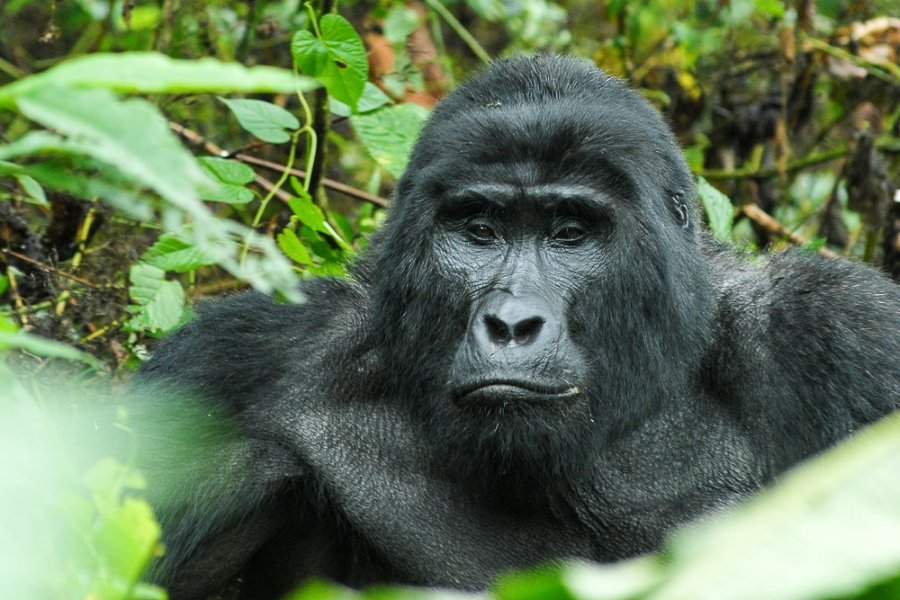
Mountain gorillas have thick dark coats adapted to the relatively cool conditions of their high-altitude habitat.
Eastern Lowland or Grauer’s Gorilla
The eastern lowland gorilla, also known as the Grauer’s gorilla, occurs only in the Democratic Republic of Congo.
It is the largest of the gorilla subspecies and occupies forests at lower elevations than mountain gorillas, although its distribution includes varied terrain.
Kahuzi-Biega National Park has historically been the best-known tourism destination associated with habituated Grauer’s gorillas.
Western Lowland Gorilla
The western lowland gorilla has the widest distribution of the four subspecies.
It occurs across portions of Central Africa, including Cameroon, the Central African Republic, Equatorial Guinea, Gabon and the Republic of Congo.
Western lowland gorillas tend to have somewhat lighter, brownish-grey coats compared with the dark coats typically associated with mountain gorillas.
Cross River Gorilla
The Cross River gorilla occurs only in a restricted region around the border between Cameroon and Nigeria.
It is one of the world’s rarest great apes and survives in fragmented mountainous forest.
Unlike mountain gorillas in Uganda and Rwanda, Cross River gorillas are not the focus of conventional mass-market trekking tourism.
What Is the Best Country to See Gorillas in Africa?
For most first-time visitors, the choice comes down to Uganda or Rwanda.
Choose Uganda when you want a highly immersive safari combining gorillas with several other wildlife experiences.
Choose Rwanda when you want a particularly compact itinerary, convenient access from Kigali and a strong selection of high-end accommodation around the gorilla region.
Choose a specialist Central African destination when you have already traveled extensively in Africa or specifically want to see western lowland gorillas and experience Congo Basin rainforest.
Congo’s gorilla destinations are biologically extraordinary, but current accessibility and security must be confirmed before travel.
Is Uganda or Rwanda Cheaper for Gorilla Trekking?
Budget is one of the biggest considerations when deciding where to see gorillas in Africa.
The cost of a gorilla safari includes much more than the trekking permit. Travelers should consider accommodation, transportation, guide services, meals, international flights, domestic flights where necessary, porter services, tips and additional activities.
Uganda has traditionally appealed to a particularly broad spectrum of travelers because accommodation ranges from comfortable mid-range properties to exceptional luxury forest lodges.
Rwanda’s gorilla tourism strategy has a particularly strong premium positioning, and the country is home to several internationally recognized luxury lodges.
Rather than comparing permit prices alone, travelers should request the complete safari cost.
A less expensive permit does not automatically produce the least expensive itinerary if transport or accommodation arrangements differ significantly.
Gabba Gorilla Expeditions can structure a safari according to the traveler’s preferred comfort level and overall budget rather than focusing on one component of the trip.
How Difficult Is Gorilla Trekking?
Gorilla trekking is an active wildlife experience rather than a conventional game drive.
You should expect uneven ground, roots, mud, slopes, dense vegetation and potentially several hours of walking.
Some treks are relatively short. Others can be physically demanding.
Because gorillas move freely, nobody can guarantee that your family will be close to the trailhead on the day of your trek.
Your preparation should therefore assume a moderately challenging hike even if the actual trek proves easier.
Regular walking, hiking and basic cardiovascular exercise before traveling can make the experience considerably more comfortable.
Porters are also extremely useful. They can help carry a backpack and provide assistance over difficult sections of the trail while their employment contributes directly to local livelihoods.
What Happens on a Gorilla Trekking Day?
Your day usually starts very early.
After breakfast, your Gabba Gorilla Expeditions driver-guide transfers you from your lodge to the relevant park headquarters or visitor center.
Rangers conduct a briefing covering forest etiquette, gorilla behavior, safety procedures and conservation regulations.
You are then allocated to a habituated gorilla family and begin walking with ranger guides and trackers.
The forest itself is a major part of the adventure.
You may encounter birds, butterflies, monkeys, unusual plants and spectacular views while trackers interpret signs left by the gorillas.
Eventually, the trackers locate the family.
The atmosphere usually changes immediately.
People lower their voices. Cameras are prepared. The group carefully approaches under instructions from the ranger.
Then the gorillas appear.
A huge silverback may be feeding quietly while a juvenile climbs above him. A mother may move through the vegetation carrying an infant. Young gorillas may play with one another before suddenly settling beside an adult.
The encounter is not staged.
There are no cages and no performance.
You are observing wild primates carrying out their normal lives within their natural forest home.
That authenticity is what makes gorilla trekking one of Africa’s most powerful wildlife experiences.
Best Time to See Gorillas in Africa
Gorilla trekking is generally possible throughout the year in established destinations such as Uganda and Rwanda.
However, seasonal weather patterns influence trail conditions.
The relatively drier periods are popular because forest paths may be less muddy and hiking conditions can be easier. These periods also coincide with strong demand, meaning permits and popular lodges can sell out well in advance.
Rainier months should not automatically be dismissed.
Gorillas inhabit rainforest and mountain forest, so rainfall is possible at virtually any time. Greener landscapes, fewer visitors at some properties and different seasonal offers can make wetter periods attractive.
The best month therefore depends on your priorities.
If your priority is easier hiking conditions, lean toward a drier period.
If you value quieter travel and are comfortable with rain, shoulder or wetter months can work extremely well.
What to Pack for Gorilla Trekking in Africa
Packing correctly can significantly improve your trekking experience.
Strong waterproof hiking shoes with reliable grip are among the most important items. Trails can become muddy and slippery, especially after rain.
Wear lightweight long trousers and a long-sleeved trekking shirt to protect your skin from vegetation and insects. Gardening-style gloves can be helpful when gripping branches or vegetation on steep sections.
Carry a lightweight waterproof jacket because weather can change quickly in mountain forests.
A small daypack can hold drinking water, packed lunch where provided, camera equipment and personal essentials.
For photography, carry sufficient batteries and memory cards. Flash photography around gorillas is prohibited, so travelers should understand their camera’s available-light settings before entering the forest.
Gorilla Trekking Photography
Photographing gorillas is both rewarding and challenging.
Forest light can be dim, vegetation can obstruct subjects and gorillas can move unexpectedly.
Instead of spending the entire encounter looking through a camera, balance photography with simply observing.
Some of the most memorable moments occur when a gorilla looks directly toward the group, a juvenile begins playing or a silverback moves silently through dense vegetation.
Photography should document the experience rather than replace it.
Gorilla Trekking Rules and Responsible Tourism
Gorilla tourism operates under strict rules because gorillas are wild animals and are genetically close to humans.
Visitors must follow ranger instructions carefully, maintain the required distance whenever circumstances allow, avoid eating around gorillas and never attempt to touch them.
Travelers who are ill may be prevented from trekking because human respiratory diseases can present serious risks to gorillas.
Flash photography should not be used.
Visitors should also keep their voices low and avoid sudden disruptive movements.
These restrictions are not inconveniences. They are fundamental components of responsible gorilla tourism.
Gorilla Conservation and Tourism
A well-managed gorilla safari is much more than a wildlife holiday.
Tourism can generate revenue for conservation activities while supporting guides, trackers, porters, lodge employees, drivers, craftspeople, farmers and communities surrounding protected areas.
Gorilla conservation requires constant effort.
Habitat protection, veterinary monitoring, ranger patrols, research, community partnerships and responsible tourism all contribute to the long-term survival of gorilla populations.
Choosing an ethical safari operator and respecting park regulations therefore matters.
Gabba Gorilla Expeditions encourages travelers to approach gorilla trekking as a privilege rather than simply another attraction to tick off a travel list.
Combining Gorilla Trekking With a Uganda Wildlife Safari
One of the strongest reasons to choose Uganda is the ability to combine gorilla trekking with a traditional African safari.
After trekking mountain gorillas in Bwindi, travelers can continue to Queen Elizabeth National Park for game drives and a boat safari.
The journey can then extend to Kibale National Park for chimpanzee tracking.
Longer safaris can incorporate Murchison Falls National Park, where the Nile passes through a dramatic gorge before continuing through wildlife-rich savannah.
This creates an exceptionally diverse itinerary incorporating gorillas, chimpanzees, elephants, lions, hippos, buffaloes, antelopes, birds and spectacular landscapes.
Combining Gorilla Trekking With a Rwanda Safari
Rwanda also offers excellent extensions beyond Volcanoes National Park.
Travelers can continue to Nyungwe National Park for chimpanzee tracking and other primate experiences.
Akagera National Park introduces a contrasting savannah ecosystem where game drives provide opportunities to experience Rwanda’s larger wildlife.
Lake Kivu can then provide a peaceful break between active safari experiences.
This combination makes it possible to build a complete Rwanda holiday rather than flying in solely for one gorilla trek.
Luxury Gorilla Trekking Safaris in Africa
A luxury gorilla safari in Africa combines the raw adventure of entering a wild forest with exceptional comfort before and after the trek.
Luxury does not change the gorilla encounter itself.
Every visitor enters the same forest, faces the same possibility of mud and rain and observes gorillas under the same conservation regulations.
The difference lies in everything surrounding the trek.
Private transportation, carefully selected lodges, spacious rooms, outstanding meals, personalized service, spa treatments, private guides and flexible itinerary design can transform the broader journey.
For honeymooners, photographers, families, couples and travelers celebrating special occasions, this combination can be particularly appealing.
Gabba Gorilla Expeditions designs luxury gorilla safaris around the traveler’s preferred pace instead of simply placing expensive hotels into a standard itinerary.
Short Gorilla Trekking Safaris
Travelers do not necessarily need two weeks to see gorillas.
Depending on the arrival point and destination, short itineraries can be designed around a single gorilla trek.
A short Uganda gorilla safari can focus primarily on Bwindi or Mgahinga, while Rwanda’s compact geography makes Volcanoes National Park particularly convenient for travelers with limited time.
However, when time allows, spending additional nights around the destination is worthwhile.
Extra time reduces travel pressure and creates opportunities for community experiences, nature walks, birdwatching, golden monkey tracking or simply enjoying the extraordinary scenery.
Gorilla Trekking for Honeymooners
Gorilla trekking can form the centerpiece of an unforgettable African honeymoon.
The experience combines adventure, privacy, luxury accommodation and an encounter that couples are unlikely to experience anywhere else.
A honeymoon itinerary might combine a luxury gorilla lodge with private transfers, a second primate experience and several relaxing days elsewhere in East Africa.
It can also be paired with a traditional savannah safari or an Indian Ocean beach extension.
Gabba Gorilla Expeditions can adjust the itinerary to balance active trekking days with slower, more comfortable experiences.
Gorilla Trekking for Older Travelers
Age alone does not necessarily prevent someone from experiencing gorilla trekking.
Physical condition, mobility and the difficulty of the assigned route are more important considerations.
Older travelers should discuss mobility requirements with their safari planner before traveling.
Where operationally possible, park personnel may consider fitness and mobility when organizing trekking groups, although the location of wild gorillas can never be guaranteed.
Hiring a porter is strongly recommended.
Travelers with significant mobility concerns should obtain appropriate medical advice before committing to a demanding forest trek.
Is Gorilla Trekking Safe?
Organized gorilla trekking in established destinations is carefully controlled.
Habituated gorilla families have gradually become accustomed to the presence of researchers and small groups of visitors, and ranger guides supervise encounters.
However, habituation does not mean domestication.
Gorillas remain powerful wild animals.
Visitors must therefore follow ranger instructions at all times.
General travel safety should also be considered separately from animal encounters. Conditions differ between countries and regions, particularly in parts of Central Africa.
Always check current official travel information before departure.
How Far in Advance Should You Book Gorilla Trekking?
Gorilla trekking should ideally be planned well in advance, especially when traveling during popular months.
The number of visitors permitted to trek habituated gorilla families each day is deliberately restricted.
As a result, permit availability can become the factor that determines your entire safari schedule.
Luxury lodges can also fill quickly during peak travel periods.
Booking early gives Gabba Gorilla Expeditions more flexibility when matching permits, preferred accommodation and transport arrangements.
Travelers planning honeymoons, family trips or fixed international flights should be particularly careful about leaving gorilla permits until the last minute.
Where Should First-Time Visitors See Gorillas?
For most first-time gorilla travelers, Uganda or Rwanda will provide the most practical starting point.
Uganda is particularly strong for travelers wanting an extensive safari combining several national parks and primate experiences.
Rwanda is particularly strong for travelers looking for a compact, premium journey with straightforward access between Kigali and the gorilla region.
Neither destination should be viewed simply as a substitute for the other.
They have different landscapes, accommodation styles and itinerary possibilities.
A good safari planner should establish what kind of overall journey you want before recommending a destination.
Why Gorilla Trekking Should Be Part of an African Safari
Africa offers extraordinary wildlife experiences, from watching lions on the savannah to observing elephants beside rivers and witnessing enormous herds crossing East African plains.
Gorilla trekking is different.
The experience takes place on foot.
There is no safari vehicle separating you from the environment.
You hear the forest around you, feel the humidity, climb the slopes and follow tracks through vegetation before finally entering the presence of another great ape.
Perhaps the most remarkable element is the behavior.
Gorillas rest, feed, groom, play and care for their young in ways that can feel surprisingly familiar.
That combination of physical adventure, biological connection and wilderness makes gorilla trekking difficult to compare with any conventional wildlife safari.
Why Choose Gabba Gorilla Expeditions for Gorilla Trekking in Africa?
Choosing the right safari company is particularly important for a gorilla trekking journey because numerous components must work together.
Gabba Gorilla Expeditions specializes in tailor-made gorilla and wildlife safaris designed around each traveler’s available time, preferred comfort level, interests and budget.
We help travelers coordinate the practical elements surrounding their gorilla experience, including safari routing, accommodation planning, private ground transportation and trekking arrangements.
Our approach emphasizes private and personalized safari experiences rather than forcing every traveler into the same itinerary.
We work with experienced local driver-guides who understand the destinations and the practical realities of traveling through East Africa.
Accommodation can be selected according to your preferred style, from comfortable safari lodges to luxury properties overlooking forested landscapes.
Most importantly, we recognize that a gorilla safari is often a once-in-a-lifetime journey.
Our goal is therefore not simply to transport you to a national park. It is to create a complete African journey around the experience.
Frequently Asked Questions About Where to See Gorillas in Africa
Where is the best place to see gorillas in Africa?
For most first-time travelers seeking mountain gorillas, Bwindi Impenetrable National Park in Uganda and Volcanoes National Park in Rwanda are the leading choices. Mgahinga Gorilla National Park provides another excellent Uganda option.
Which African countries have gorillas?
Wild gorillas occur in several African countries, including Uganda, Rwanda, the Democratic Republic of Congo, Republic of Congo, Gabon, Cameroon, Central African Republic, Equatorial Guinea and Nigeria. Their distribution depends on gorilla species and subspecies.
Where can I see mountain gorillas?
Mountain gorillas occur in the Bwindi ecosystem and Virunga Massif. Organized tourism is particularly well established in Uganda’s Bwindi and Mgahinga national parks and Rwanda’s Volcanoes National Park.
Can you see gorillas in Uganda?
Yes. Uganda offers mountain gorilla trekking in Bwindi Impenetrable National Park and Mgahinga Gorilla National Park.
Can you see gorillas in Rwanda?
Yes. Mountain gorilla trekking in Rwanda takes place in Volcanoes National Park in the northwestern part of the country.
Can you see gorillas in Congo?
The Democratic Republic of Congo contains both mountain gorillas and eastern lowland gorillas. However, access and tourism operations can change because of security and operational conditions. Travelers must check current official park information before planning a trip.
Where can I see eastern lowland gorillas?
Eastern lowland or Grauer’s gorillas occur only in the Democratic Republic of Congo. Kahuzi-Biega National Park has historically been the best-known destination for tourism encounters with this subspecies, although current visitor access must be verified.
Where can I see western lowland gorillas?
Western lowland gorillas occur across Central African forests, including the Republic of Congo, Central African Republic, Gabon, Cameroon and Equatorial Guinea.
Can tourists see Cross River gorillas?
Cross River gorillas are extremely rare and occur around the Nigeria-Cameroon border. They are not a conventional habituated gorilla trekking attraction comparable with mountain gorillas in Uganda and Rwanda.
Is Uganda or Rwanda better for gorilla trekking?
Both are excellent. Uganda is especially suitable for travelers who want to combine gorillas with a longer wildlife and primate safari. Rwanda is particularly attractive for travelers prioritizing convenient access, compact itineraries and luxury accommodation.
How long do you spend with gorillas?
Standard mountain gorilla trekking experiences generally allow approximately one hour with the habituated gorilla family after it has been located, subject to park rules and ranger instructions.
How long does gorilla trekking take?
The complete activity can take several hours because the time required to locate the gorillas varies. Gorillas move naturally through their habitat, meaning trekking duration cannot be guaranteed.
Is gorilla trekking difficult?
It can be. Mountain forests contain steep slopes, mud, roots and thick vegetation. A reasonable level of fitness is recommended, although individual trek difficulty varies.
What should I wear for gorilla trekking?
Wear strong hiking footwear, long trousers, a long-sleeved shirt and lightweight waterproof clothing. Gloves, gaiters and a small daypack can also be useful.
Can I touch a gorilla?
No. Visitors should never deliberately touch gorillas. Follow the distancing and behavioral instructions given by park rangers.
Can children go gorilla trekking?
Minimum-age regulations apply to gorilla trekking and should always be checked for the specific country and park when booking a family safari.
When is the best time for gorilla trekking?
Gorilla trekking can generally be undertaken throughout the year in Uganda and Rwanda. Drier periods are popular because trails may be easier, while wetter periods can offer lush scenery and potentially quieter travel.
Should I book my gorilla permit in advance?
Yes. Permit numbers are limited, and popular dates can sell out. Booking well ahead is especially important if you have fixed travel dates.
Can I combine gorilla trekking with chimpanzee trekking?
Absolutely. Uganda is particularly well suited to combining mountain gorillas in Bwindi or Mgahinga with chimpanzee tracking in Kibale National Park. Rwanda can combine Volcanoes National Park with primate experiences in Nyungwe.
Can gorilla trekking be combined with a Big Five safari?
Yes. Gorilla trekking can be incorporated into a longer East African safari featuring savannah wildlife. Uganda and Rwanda can also be combined with Kenya or Tanzania for a larger regional journey.
Plan Your African Gorilla Safari With Gabba Gorilla Expeditions
Knowing where to see gorillas in Africa opens the door to one of the continent’s most extraordinary adventures.
For travelers seeking mountain gorillas, the mist-covered forests of Uganda and Rwanda provide the most established options. Bwindi Impenetrable National Park delivers a deeply immersive rainforest experience, Mgahinga combines gorillas with the spectacular Virunga Volcanoes, and Rwanda’s Volcanoes National Park provides a highly accessible and luxurious approach to mountain gorilla trekking.
Beyond these famous destinations lies another world of gorilla conservation. Eastern lowland gorillas survive in the Democratic Republic of Congo, western lowland gorillas inhabit the vast forests of Central Africa, and the exceptionally rare Cross River gorilla survives around the Nigeria-Cameroon border.
Every destination tells a different part of Africa’s gorilla story.
For most travelers, however, the ideal gorilla safari is not determined simply by drawing a circle around a gorilla population on a map. It depends on accessibility, trekking opportunities, accommodation, budget, other safari interests, available travel time and current conditions.
That is where careful planning becomes essential.
Gabba Gorilla Expeditions creates tailor-made gorilla trekking safaris designed around these individual requirements. From Uganda’s Bwindi Impenetrable Forest and Mgahinga Gorilla National Park to Rwanda’s spectacular Volcanoes National Park, we help transform the dream of seeing wild gorillas into a carefully organized African journey.
Whether you want a short gorilla trekking adventure, a private luxury gorilla safari, a Uganda primate expedition, a combined Uganda and Rwanda gorilla tour or a longer East African wildlife safari, your journey can be customized around the experiences that matter most to you.
The forests of Africa are home to some of our planet’s last wild gorillas.
Seeing them is not simply another safari sighting.
It is an encounter with one of our closest living relatives, experienced in the forests where gorillas have lived for generations and for many travelers, it becomes the defining moment of their African journey.

Written by
Timothy
Uganda and Rwanda safari specialist sharing practical destination knowledge and thoughtful planning advice.