


Ultimate Complete Guide for First Time Gorilla Trekkers
Going on your first gorilla trek is one of those African travel experiences that can be difficult to fully imagine until you are standing inside a misty rainforest and watching a mountain gorilla only a short distance away. Unlike a traditional wildlife safari, where most animal sightings happen from the comfort of a safari vehicle, gorilla trekking requires you to enter the forest on foot, follow experienced trackers and ranger guides, negotiate natural trails, and search for a habituated gorilla family moving freely through its territory. The experience combines adventure, physical activity, conservation, anticipation and an extraordinary wildlife encounter.
For many travelers planning a gorilla trekking safari in Uganda or Rwanda, the biggest question is simply: what should I expect?
You should expect an early morning, an official ranger briefing, a potentially challenging forest hike, changing weather conditions, excitement as trackers search for the gorillas and, once the family is located, an unforgettable period observing the gorillas in their natural habitat. You should also expect the experience to be unpredictable. The gorillas are wild animals rather than animals kept within an enclosure, meaning the distance and difficulty of each trek can vary.
This complete guide to what to expect on your first gorilla trek explains the experience from preparation and arrival at the park to the forest hike, meeting the gorillas, photography, trekking rules, what to wear, what to pack and choosing between Uganda and Rwanda. As a specialist East African safari operator, Gabba Gorilla Expeditions can also help first-time travelers organize gorilla permits, private transportation, suitable accommodation and customized gorilla safari itineraries.
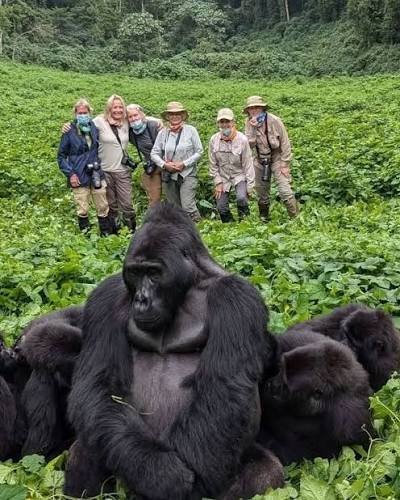
What Is Gorilla Trekking?
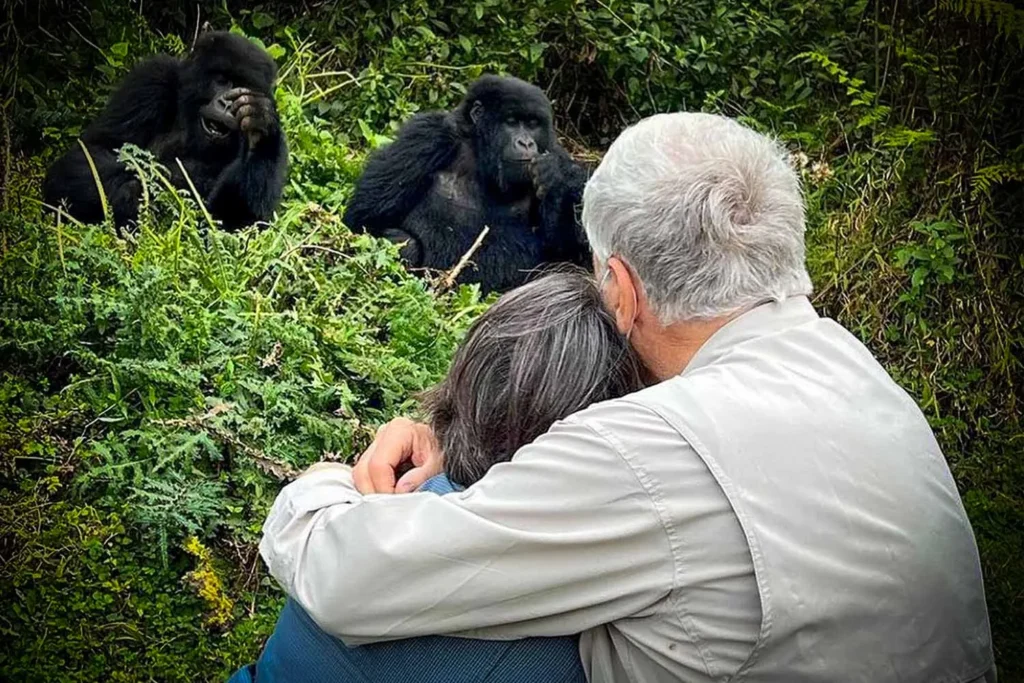
Gorilla trekking is a guided wildlife activity in which small groups of visitors enter protected forests accompanied by trained park rangers to locate habituated gorilla families. Habituation is a gradual process through which researchers and conservation teams allow particular gorilla groups to become accustomed to carefully controlled human presence without turning them into domesticated animals.
This distinction is important. The gorillas you encounter during a trek remain completely wild. They feed naturally, move through their territories, communicate with one another, raise their young and respond to their environment without being confined for tourism.
Your ranger team does not simply take you to a permanent location where gorillas are waiting. Trackers monitor signs of the gorillas’ movements, including feeding sites, trails, nests and other clues. Because gorillas can move considerably between one day and another, every trek develops differently.
This unpredictability is one reason gorilla trekking for first-time visitors feels so different from many conventional wildlife activities.
Where Can You Go Gorilla Trekking?
Mountain gorilla trekking takes place within a relatively small region of East and Central Africa. The principal destinations are Uganda, Rwanda and the Democratic Republic of Congo.
Uganda offers mountain gorilla trekking in Bwindi Impenetrable National Park and Mgahinga Gorilla National Park. Bwindi is one of Africa’s most celebrated rainforest destinations and provides trekking from different sectors, including Buhoma, Ruhija, Rushaga and Nkuringo. The mountainous terrain, dense vegetation and remarkable biodiversity make the forest itself an important part of the experience.
Mgahinga Gorilla National Park offers a different setting within Uganda’s section of the Virunga landscape. Here, forest-covered volcanic slopes and views of the Virunga volcanoes create a spectacular environment for primate adventures.
In Rwanda, gorilla trekking takes place in Volcanoes National Park, an iconic conservation area characterized by bamboo forests and dramatic volcanic scenery. Its accessibility from Kigali makes Rwanda particularly attractive for travelers with limited time and those planning premium short gorilla safaris.
Choosing the right destination depends on your budget, available time, preferred accommodation, wider safari interests and the type of journey you want to experience.
What to Expect Before Your First Gorilla Trek
Your gorilla trekking experience begins long before you enter the forest.
One of the most important requirements is securing a valid gorilla trekking permit. Permits are issued for specific trekking dates and availability can become limited during popular travel periods. This is why travelers should generally organize their permits as early as practical rather than booking international flights and accommodation first and assuming trekking spaces will remain available.
When you arrange your safari through Gabba Gorilla Expeditions, your itinerary can be coordinated around permit availability, accommodation, transportation and additional safari activities.
Your lodge location is particularly important in destinations such as Bwindi. The park has different trekking sectors, and staying near the correct starting point helps avoid unnecessarily long transfers on the morning of your trek.
During the evening before trekking, prepare your daypack, hiking boots, clothing, camera equipment and rain protection. Charge your batteries, ensure your camera’s flash can be disabled and prepare drinking water and any snacks or packed lunch arranged for the trek.Most importantly, get enough rest.The next morning usually begins early.
The Morning of Your First Gorilla Trek
Expect an early breakfast followed by transportation to your designated gorilla trekking headquarters.
With a properly planned Gabba Gorilla Expeditions itinerary, your driver-guide will already know the correct trekking location and departure schedule. You should arrive with enough time to register and prepare before the official briefing begins.
There is often a wonderful atmosphere around the headquarters in the morning. Travelers from different parts of the world gather in hiking boots and rain jackets, guides prepare for the day’s activities and park staff coordinate trekking groups.
For many first-time trekkers, this is when the excitement becomes real.
Within a few hours, you could be standing beside one of the world’s remaining mountain gorilla families.
The Gorilla Trekking Briefing
Before entering the forest, park authorities conduct a briefing explaining how the trek will operate and how visitors should behave around the gorillas.
Pay close attention.
The briefing covers important conservation and safety guidelines, including maintaining the required distance from gorillas, following ranger instructions, avoiding flash photography, keeping noise levels low and respecting rules designed to reduce the possibility of transmitting human illnesses to gorillas.
Visitors are then allocated to trekking groups and assigned a habituated gorilla family.
Where circumstances allow, factors such as fitness, age and mobility may be considered when organizing groups, although no particular trekking duration can be guaranteed because gorillas continuously move through their habitat.
You will then meet the ranger guides who accompany you into the forest.
And the adventure begins.
Hiring a Porter for Your Gorilla Trek
Before leaving the starting point, you may have an opportunity to hire a porter.
Take that opportunity seriously.
A porter can carry your daypack, water, packed lunch and photography equipment while also helping you negotiate difficult sections of the trail. Even travelers who exercise regularly can benefit from having their hands free when climbing steep or slippery terrain.
Hiring a porter also has a broader community benefit because it creates direct employment opportunities for people living around gorilla conservation areas.
Some travelers initially assume they will not need assistance because they are fit. After several hours of hiking through humid forest while carrying camera equipment and water, many discover just how useful a porter can be.
For a first gorilla trek, hiring one can make the entire experience considerably more comfortable.
Entering the Rainforest
This is where gorilla trekking becomes completely different from an ordinary game drive.
You enter the forest on foot.
Depending on your trekking location, the first section may follow an established path before the terrain becomes increasingly natural. Vegetation may become thicker, trails narrower and slopes steeper.
The rainforest surrounds you.
You hear birds calling from the canopy, insects moving through vegetation and occasionally the distant sounds of primates. Sunlight appears through gaps in the trees before disappearing beneath thick forest cover.
In Bwindi especially, the forest itself is an extraordinary attraction. Its dense vegetation and mountainous landscape explain why the word “impenetrable” became associated with the area.
Your ranger guides lead the group while communicating with trackers who may have entered the forest earlier to locate the gorilla family.
How Long Does Gorilla Trekking Take?
This is one of the most frequently asked questions among first-time gorilla trekkers.
There is no guaranteed trekking duration.
A gorilla family may be relatively close to the starting area on one morning and considerably farther away the following day. Gorillas move according to food availability, social dynamics, weather and other natural factors.
Consequently, the search could require a relatively manageable walk or several hours of hiking.
This uncertainty should be considered part of the experience rather than an inconvenience.
You are searching for wild mountain gorillas inside their natural habitat.A reasonable level of fitness therefore helps enormously. You do not need to be an elite hiker, but regular walking, climbing stairs and doing some hill training before traveling can make your first gorilla trek much more enjoyable.
Is Gorilla Trekking Difficult?
Gorilla trekking difficulty varies significantly.
Some travelers encounter their assigned gorilla family after a relatively short hike. Others may climb steep forested slopes and navigate muddy terrain for hours.
Weather also affects difficulty. Rain can transform forest trails quickly, making roots, rocks and slopes slippery. Even during traditionally drier travel periods, rain remains possible in tropical and montane forest environments.
Your fitness level, footwear and clothing therefore matter.
However, do not allow stories about difficult treks to discourage you automatically. Many people of different ages and fitness levels successfully complete gorilla trekking experiences each year.
Prepare sensibly, communicate any mobility concerns during the planning process and consider hiring a porter.
Following the Trackers
Finding mountain gorillas involves far more expertise than simply walking through the forest.
Experienced gorilla trackers study the gorillas’ previous movements and search for evidence of their current location. Rangers and trackers may observe footprints, broken vegetation, feeding remains, dung and nests.
Communication between tracking teams helps narrow the search.
For visitors, this creates a growing sense of anticipation.
You begin wondering whether every movement ahead might be a gorilla.
Then your guide stops. Information comes through. The gorillas are nearby.
The Moment Your Ranger Says, “The Gorillas Are Close”
For many visitors, this is one of the most exciting moments of the entire safari. After potentially hiking for several hours, your ranger tells you that the gorilla family is close. Your group pauses. Porters may remain at a designated point with unnecessary equipment while you prepare cameras and receive final instructions. The atmosphere changes immediately. People speak more quietly. The tiredness from climbing suddenly seems less important. You follow the ranger farther through the vegetation. Then you see something dark moving through the leaves. Your first mountain gorilla encounter has begun.
Seeing a Mountain Gorilla for the First Time
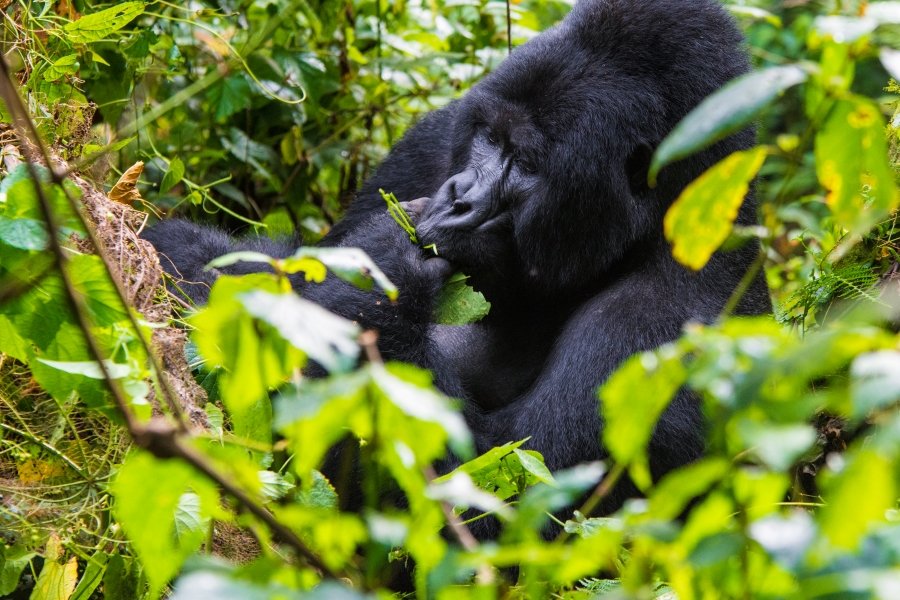
No photograph fully prepares you for the physical presence of a mountain gorilla. You might first encounter a female feeding quietly among thick vegetation. A juvenile could appear through the branches. Or you may suddenly see an enormous silverback sitting on the forest floor. The size of an adult silverback can be astonishing when seen at close range. But what often surprises first-time visitors even more is the calmness of the encounter. The gorillas may continue feeding while visitors watch. Mothers may carry infants. Young gorillas can play or climb vegetation. Adults may groom one another or simply rest. The experience does not feel like watching an animal perform. You are observing the everyday life of a wild gorilla family. That authenticity is precisely what makes gorilla trekking so powerful.
What to Expect During Your Time With the Gorillas
Once the gorilla family has been located, standard gorilla trekking provides a controlled period for observing them under ranger supervision. This time passes surprisingly quickly. You might watch a silverback stripping vegetation with enormous hands, juveniles chasing one another through the undergrowth or a mother carefully holding an infant. Sometimes the gorillas are extremely active. At other times they may spend much of the encounter feeding or resting. Do not expect a staged wildlife spectacle. What you witness depends entirely on what the gorillas happen to be doing. That is one of the most beautiful aspects of the experience.
What Happens If a Gorilla Approaches You?
First-time trekkers often worry about what will happen if a gorilla comes closer than the recommended viewing distance. The most important rule is simple: remain calm and listen to your ranger. Never reach toward or attempt to touch a gorilla. Although habituated gorilla families have become accustomed to carefully managed human presence, they remain wild animals. A juvenile may occasionally become curious. An adult might move along a path that brings it closer to the group. Your ranger will tell you exactly how to respond. Avoid sudden movements and do not run. The experienced rangers understand gorilla behavior and are there to manage the encounter.
Can You Take Photographs of Gorillas?
Yes, photography is one of the highlights of a gorilla trekking safari, but it must always be done responsibly, flash photography is prohibited, so make sure your camera flash is switched off before approaching the gorillas, particularly because some cameras automatically activate the flash when they detect low-light conditions. Forest photography can be challenging because lighting changes constantly beneath the rainforest canopy, one moment a gorilla may be sitting in deep shade surrounded by thick vegetation, and the next it may move into a brighter clearing, therefore understanding the basic settings of your camera before your trek can help you react quickly without wasting valuable time searching through menus.
Carry enough battery power and memory storage, especially if you intend to record video, protect your equipment against rain and moisture, and keep your camera somewhere that can be reached easily when the gorillas are located, however, do not allow photography to dominate the entire encounter, take your photographs, record a few important moments, then occasionally lower the camera and watch the gorillas directly, notice their facial expressions, movements, interactions and feeding behavior, because some of the strongest memories from your first gorilla trek will be the moments you experienced personally rather than those stored on your camera.
What Should You Wear for Your First Gorilla Trek?
Choosing the correct clothing can make an enormous difference to your comfort during gorilla trekking, especially because you may be walking through thick vegetation, muddy trails, steep forest slopes and changing weather conditions, therefore wear strong, comfortable and preferably waterproof hiking boots with good ankle support and reliable grip, long trousers that protect your legs from vegetation, insects, mud and scratches, and a lightweight long-sleeved shirt that provides additional protection while remaining comfortable in humid forest conditions.
A waterproof rain jacket should remain within easy reach because weather in mountain rainforest environments can change quickly, gardening-style gloves can be useful when you need to hold vegetation or steady yourself while climbing a slippery slope, a comfortable hat can provide protection during exposed sections of the trek, and gaiters can help keep mud, water, insects and small pieces of vegetation from entering your hiking boots, especially during wet conditions.
When deciding what to wear for gorilla trekking, prioritize comfort, protection and practicality rather than choosing clothing primarily because it will look good in photographs, your trekking clothes should allow you to move comfortably through the forest, remain reasonably protected from vegetation and cope with possible rain, mud and changing temperatures, because appropriate clothing can make the difference between spending your trek worrying about discomfort and being able to concentrate fully on the extraordinary experience around you.
What to Pack for Gorilla Trekking
Your gorilla trekking daypack should contain everything you genuinely need while remaining light enough to carry comfortably through the forest, pack sufficient drinking water to remain hydrated, a packed lunch or energy snacks where appropriate, a lightweight waterproof rain jacket, your camera or smartphone, spare batteries or a power bank, personal medication, insect repellent, sunscreen and any additional essentials recommended for your particular destination or trekking conditions.
Protecting your electronics is particularly important because rain can develop unexpectedly in gorilla habitats, therefore consider carrying a waterproof backpack cover, dry bag or another suitable protective cover for your camera, smartphone, batteries and important documents, and if you are carrying valuable photography equipment, organize your bag so that the equipment remains protected but can still be accessed quickly when your ranger announces that the gorillas have been located.
Avoid filling your backpack with unnecessary items, because every additional kilogram becomes increasingly noticeable after several hours of walking through humid forest and climbing steep terrain, pack strategically, carry what contributes directly to your comfort, safety and enjoyment, and consider hiring a local porter to carry your daypack, particularly if you are bringing camera equipment or expect a longer trek, as this allows you to keep your hands free, negotiate difficult terrain more comfortably and concentrate on enjoying your first gorilla trekking experience.
Why Book Your First Gorilla Trek With Gabba Gorilla Expeditions?
Your first gorilla trek should begin with excitement rather than uncertainty about permits, transportation, accommodation or which trekking destination to choose.
Gabba Gorilla Expeditions specializes in personalized gorilla trekking journeys in Uganda, Rwanda and the wider East African region. We help travelers coordinate the essential elements of their safari, including gorilla trekking arrangements, private transportation, carefully selected accommodation and additional wildlife experiences.
For luxury travelers, we can create journeys emphasizing privacy, comfort and a relaxed travel pace. For visitors with limited time, we can design shorter gorilla-focused itineraries. For travelers wanting a complete African adventure, gorilla trekking can be combined with chimpanzees, Big Five wildlife experiences, scenic attractions and cultural encounters.
Rather than treating your gorilla permit as an isolated booking, we design the journey around the experience you want to have.
Tell us Exactly what you want
Ready to embark on an Unforgettable adventure in Africa? No idea where to start? No worries, just reach out?

Written by
Dalton
Uganda and Rwanda safari specialist sharing practical destination knowledge and thoughtful planning advice.